My first encounters with digital interfaces and image systems took place in a small neighborhood video rental store. For approximately one real, the Brazilian currency, it was possible to play video games and use a shared TV for one hour. I played sitting on the floor, while other children waited for their turn behind me. While one of us played, the others watched, offered ideas, discovered shortcuts, and tried to decipher together the things none of us could read. Time had a different weight; every minute mattered.
Many of those video games were in Japanese or English, languages we did not speak. The menus were indecipherable, with instructions that were of little help, and there was no clear explanation of the game's objective. Still, we played. Learning happened through trial and error: gestures were repeated, and then we observed their consequences on the screen, memorized positions, and associated sounds with certain actions. Little by little, the game became less unintelligible as we built a bodily vocabulary. Before understanding the language of those games, we learned how to operate their systems.
Decades later, when the artists of the 14th Mercosul Biennial - in which I also participated - were announced, I began researching the work of each of them. It was then that I came across the artist LI Yi-Fan. Among the first results that appeared was the documentation of his residency “2021 CREATORS 工作室開箱.” It was a video presenting the artist’s research, in which he developed his own tools using a game engine. Rather than using that environment only to produce images, he used the tool itself as part of his investigation. The point of interest was no longer only the final image, but also the means that made it possible.
The first work by Li Yi-Fan that I saw in person was the video art piece What Is Your Favorite Primitive (2023), exhibited at Fundação Iberê Camargo during the Mercosul Biennial. On the screen, a grotesque avatar conducted a kind of lecture on the construction of digital images and of the universe in which it was inserted. While producing computer graphics, the avatar commented on the technical, economic, and cultural processes involved in its own making. The presentation had a metalinguistic character: the image continuously discussed its own condition of existence. While the work was being shown, part of the audience laughed, while another part remained silent. The laughter was never complete; it stopped before an image that insisted on escaping any immediate interpretation. The work demanded a sustained attention span similar to that of the games we learned to play before we could even understand them.
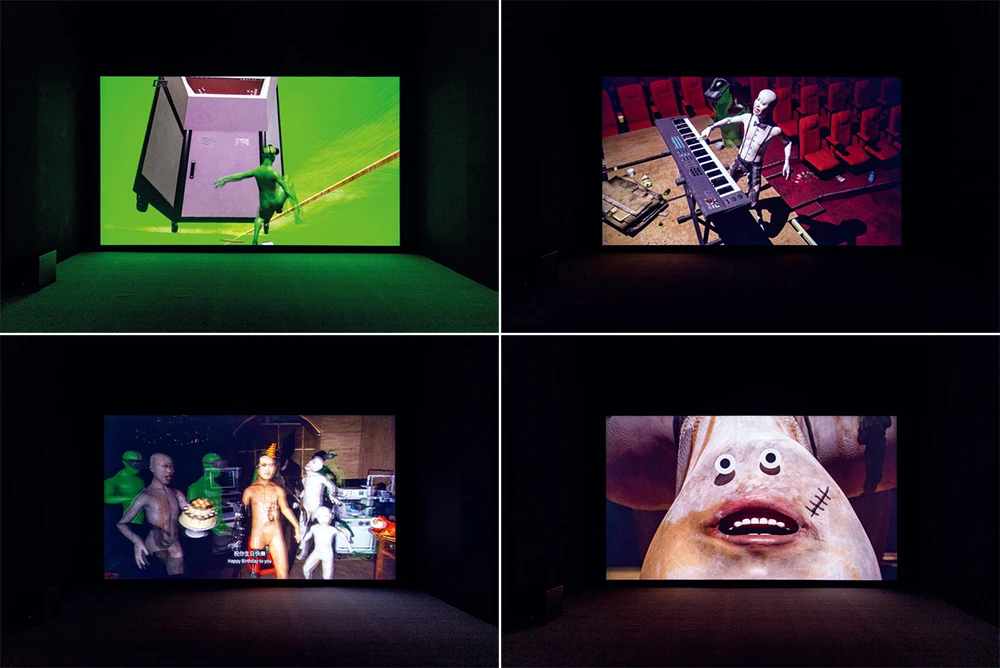
What Is Your Favorite Primitive, 2023, single-channel 4K HD video, 30 minutes; Installation view at Tapei Biennial 2023. Courtesy of the Artist and Taipei Fine Arts Museum
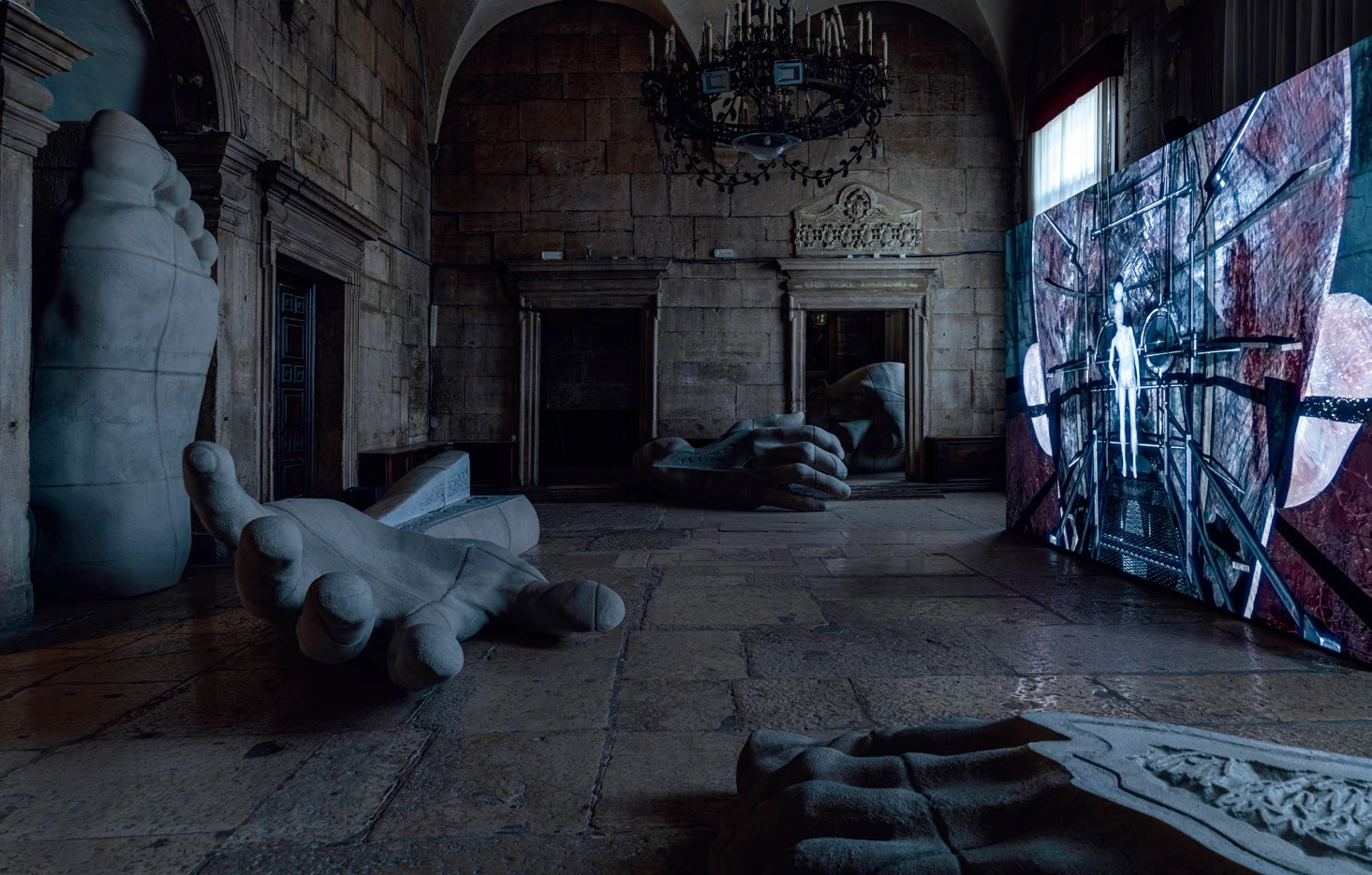
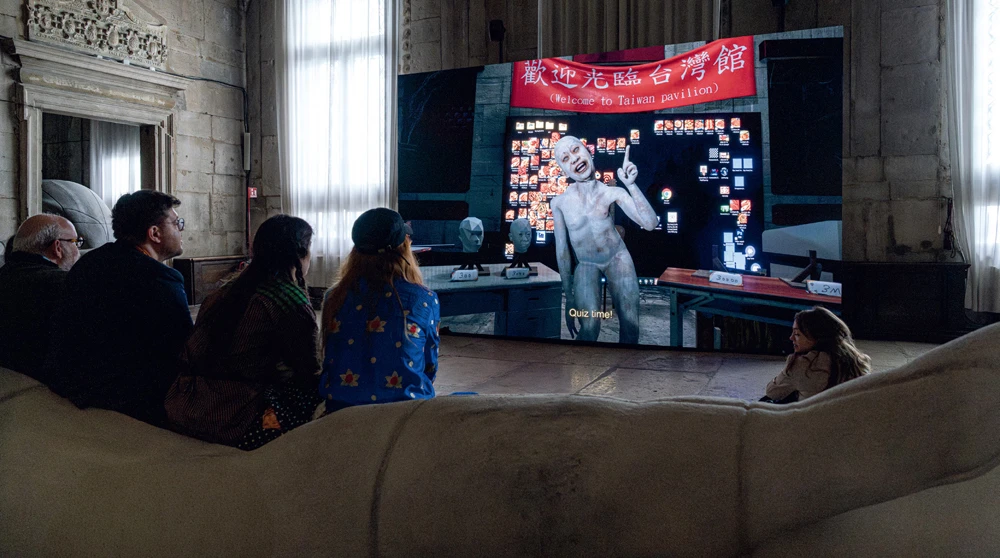
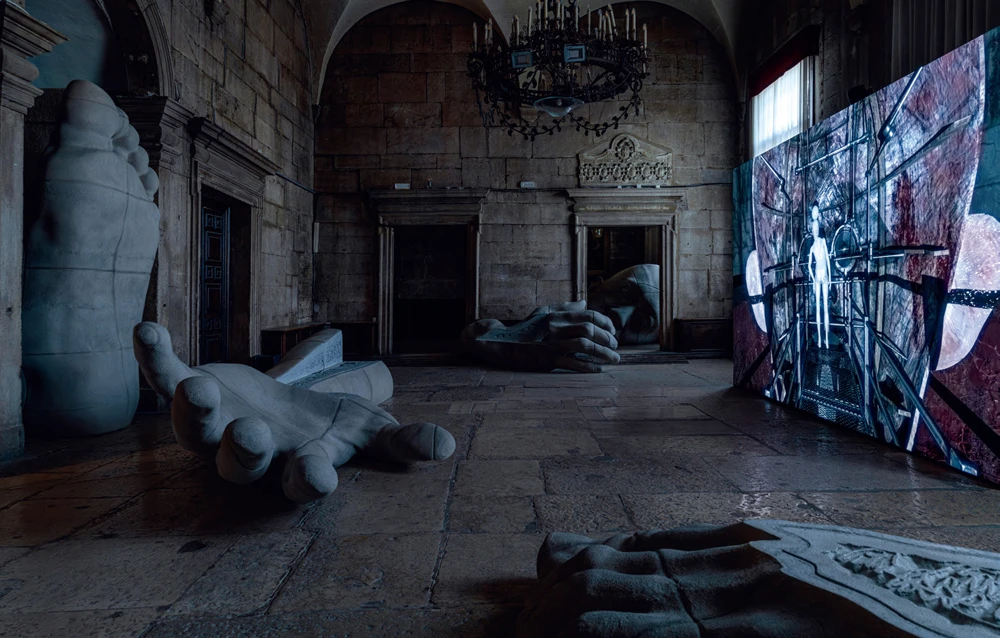
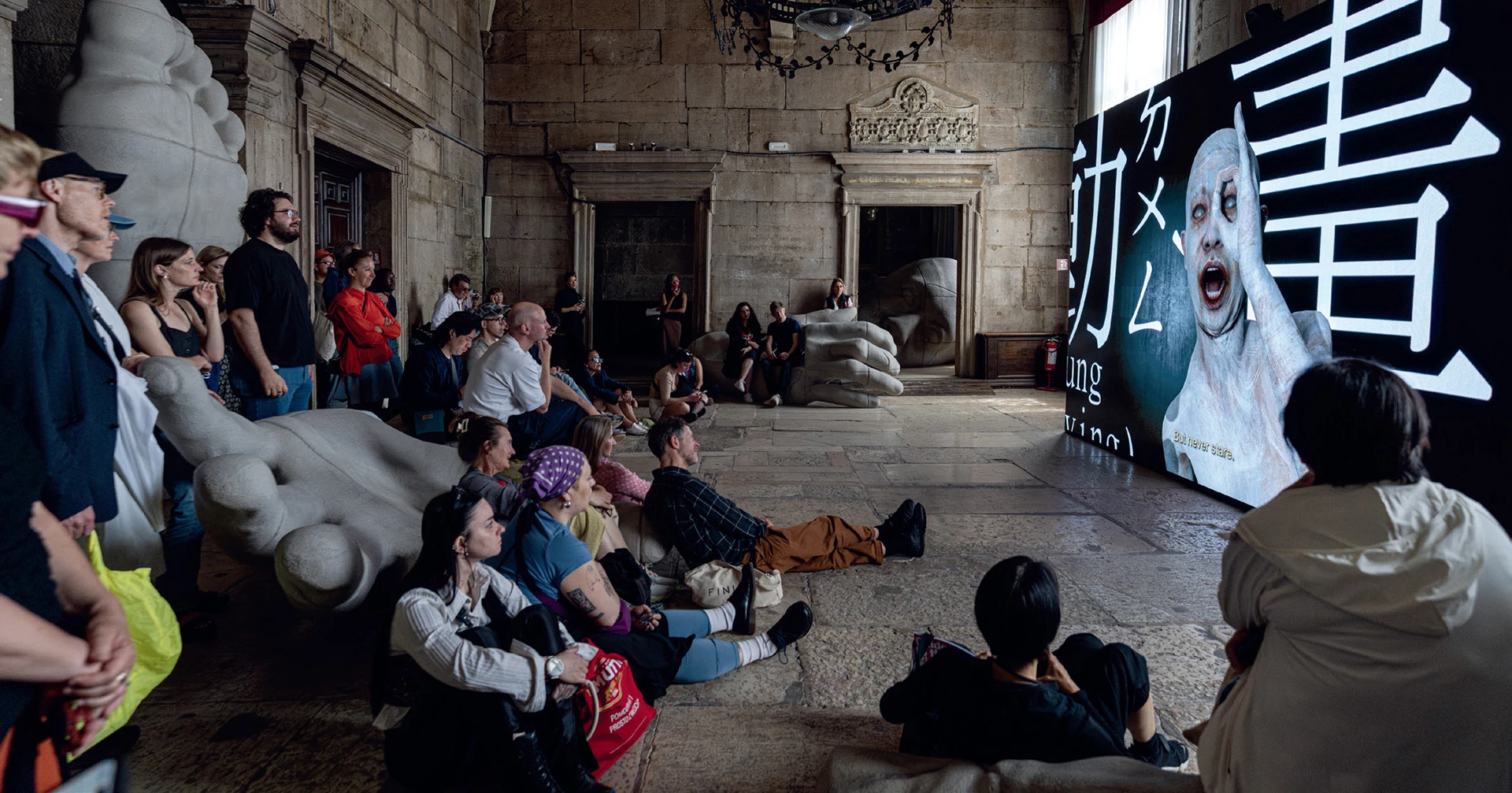
This perception took on another dimension when I was in Venice for the opening of the 61st Biennale in 2026. At the Palazzo delle Prigioni, Screen Melancholy, Taiwan's representation curated by Raphael Fonseca, occupied an old room in the building. As one moved through the palace, the intense brightness of Venice's streets gave way to the dimness of the interior. Sounds began to echo against the thick stone walls, and the eye needed a few moments to adjust before distinguishing the forms scattered throughout the space. Upon climbing the stairs, visitors encountered enormous 3D-printed anatomical fragments that resembled a dismembered body. Only after a few moments did it become clear that those remains of synthetic bodies also functioned as furniture. Rather than keeping visitors at a distance, the installation physically incorporated them: we sat, leaned, and lingered on those artificial bodies as we watched the images. Seated on them, visitors watched a video that continuously blurred the boundaries between organism, interface, and digital image. A curious circuit emerged: real bodies rested on artificial bodies in order to contemplate other bodies that existed on screen.
In a nearby room, I attended the public conversation between Fonseca and Li Yi-Fan. The artist described the shift he had made in his working process: he had abandoned traditional animation methods - based on keyframes and lengthy editing - to develop his own tools within graphics engines. By building his own instruments, LI Yi-Fan shifts the usual relationship between artist and software. Instead of accepting the limits imposed by the tool, the artist transforms them into part of the research itself. Technology thus ceases to function as a set of predefined resources and becomes a material for experimentation.
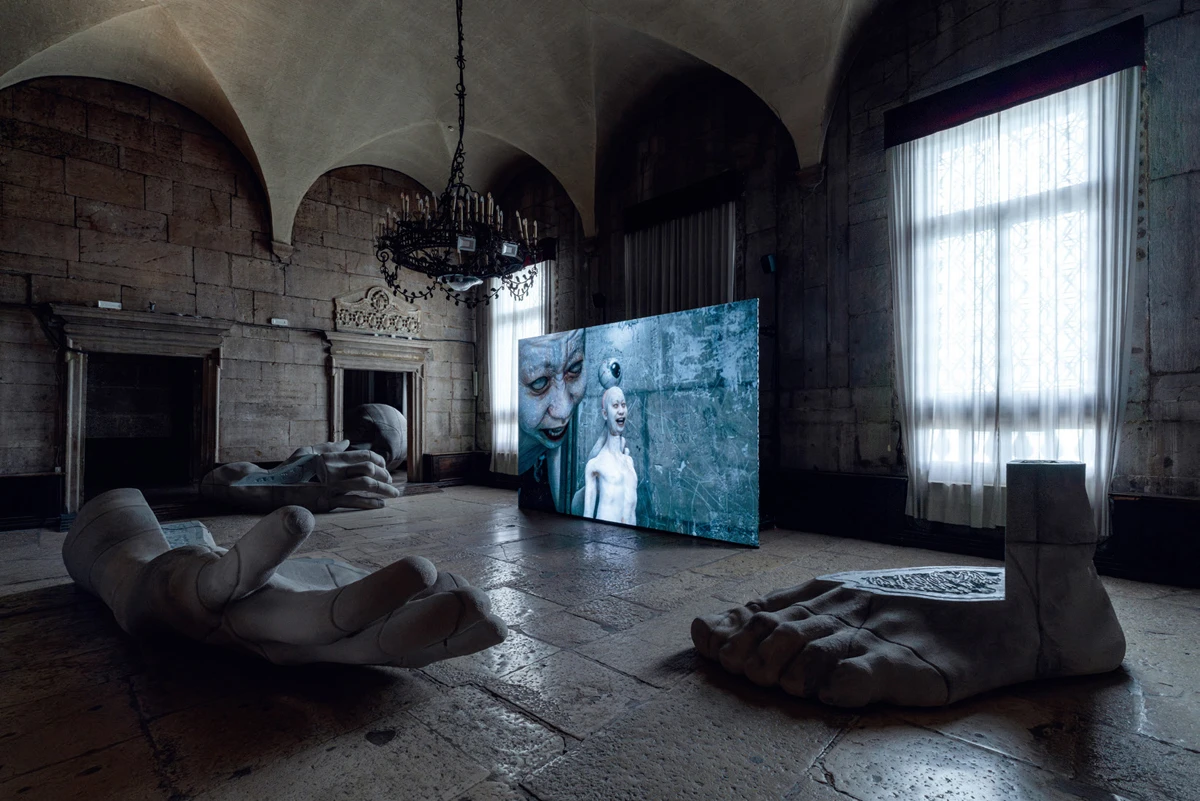
Screen Melancholy:Li Yi-Fan, 2026 © Li Yi-Fan. Courtesy of the artist and TFAM of Taiwan Collateral Event 2026
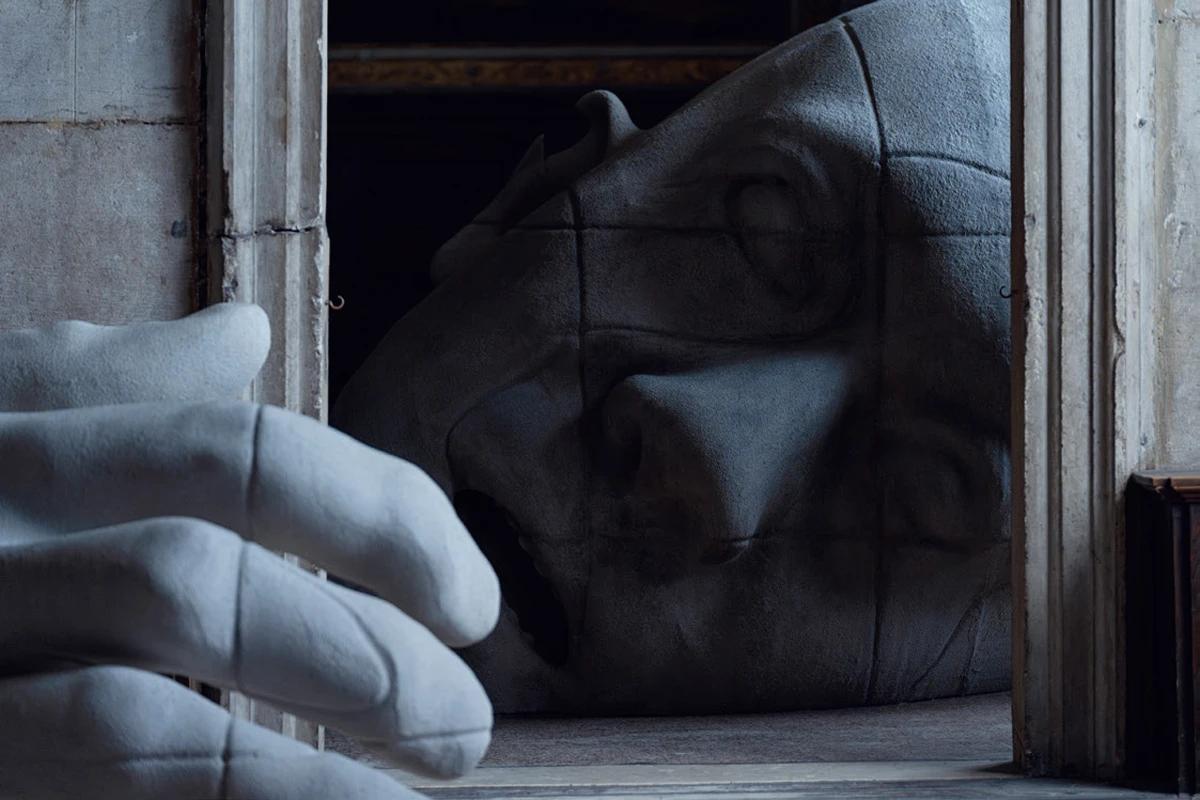
Screen Melancholy:Li Yi-Fan, 2026 © Li Yi-Fan. Courtesy of the artist and TFAM of Taiwan Collateral Event 2026
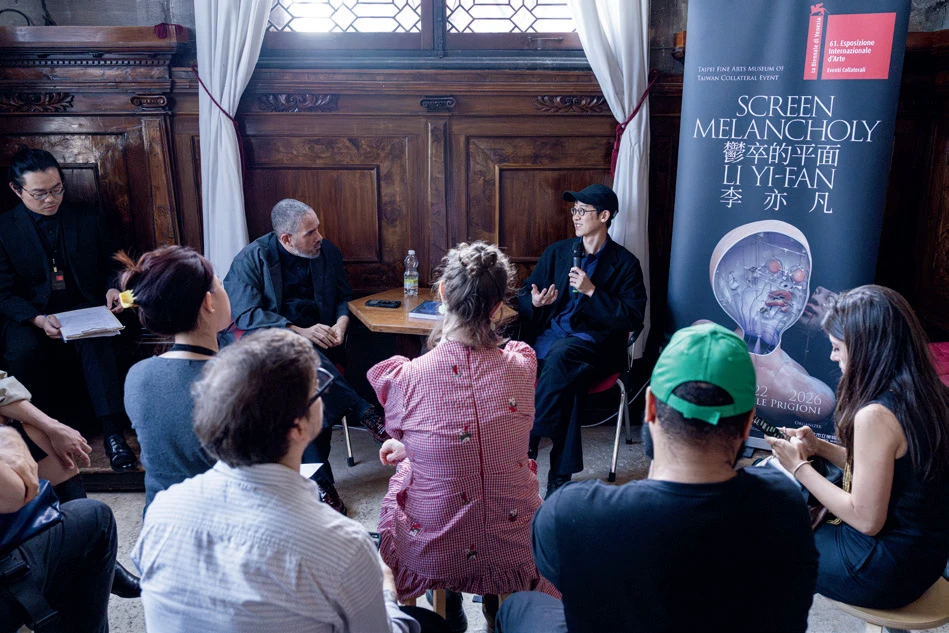
Public Program of Screen Melancholy: Li Yi-Fan, “Artist Talk” © Taipei Fine Arts Museum
Listening to him speak about the software with which he began his work, such as Flash twenty years ago, it became clear that there was a generational experience we shared. We grew up in very different countries, but we witnessed the same technological transformation. Our generation saw video games cease to be mere entertainment and become language; it followed the rapid obsolescence of software, operating systems, and hardware; and it learned that every tool carries within it a specific way of imagining and constructing images.
The visual formation of our generation did not happen only in front of video games, but also alongside the expansion of domestic internet, forums, Flash animations, the first online videos, and a digital environment that seemed to reinvent its own rules every few years. I understand Yi-Fan's production as emerging precisely from this historical context - not as technological nostalgia, but as a reflection on a shared formative experience.
This relationship appears clearly in the main work of the exhibition: a long-form video artwork shown on a loop that follows an eyeball on its journey home while virtual human organs discuss artificial intelligence, 3D modeling, and internet culture. The characters in the work operate on the verge of technical collapse, stuttering and glitching like fragmented consciousnesses, opened across multiple browser tabs at once. There was something profoundly strange about that image: a synthetic carcass simulating human flesh to speak about programming code. The eye ceases to be the thing that observes and becomes the work's protagonist; the digital space acquires an almost physical presence and begins to resist immediate consumption, mediated by pixels that vibrantly alter the colors of the historic building itself through the video's pulsing light.
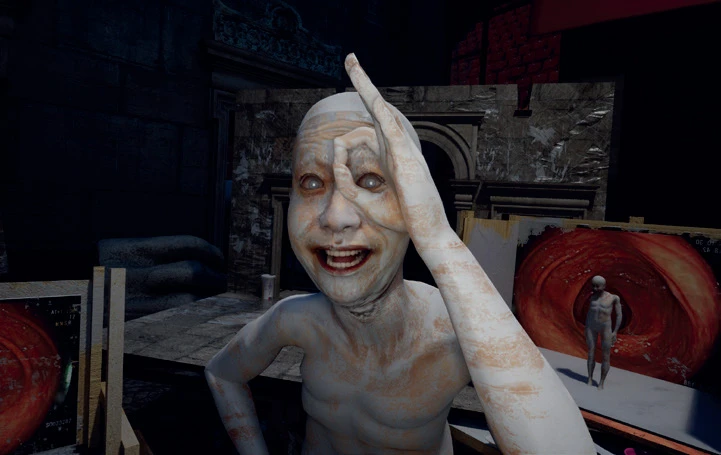
Li Yi-Fan, Screen Melancholy (screenshot), 2026, 60min, video installation © Li Yi-Fan. Courtesy of the artist and TFAM of Taiwan Collateral Event 2026
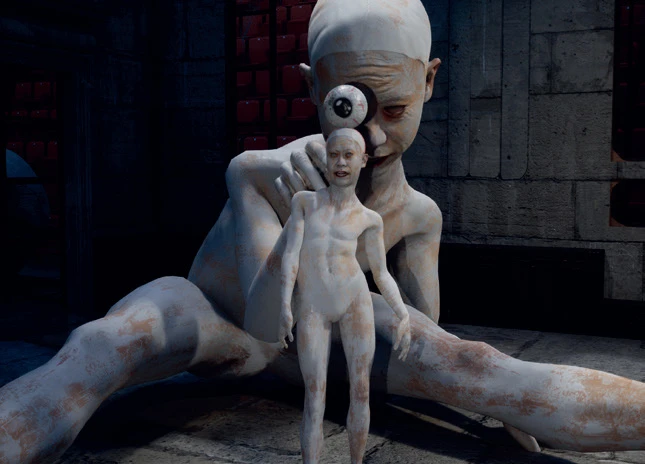
Li Yi-Fan, Screen Melancholy (screenshot), 2026, 60min, video installation © Li Yi-Fan. Courtesy of the artist and TFAM of Taiwan Collateral Event 2026
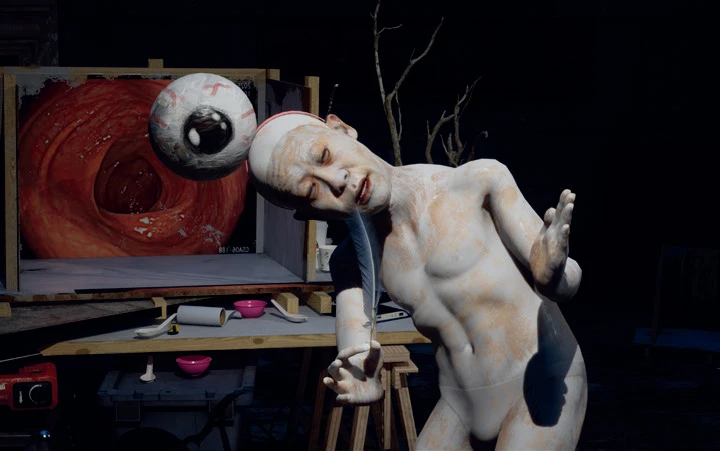
Li Yi-Fan, Screen Melancholy (screenshot), 2026, 60min, video installation © Li Yi-Fan. Courtesy of the artist and TFAM of Taiwan Collateral Event 2026
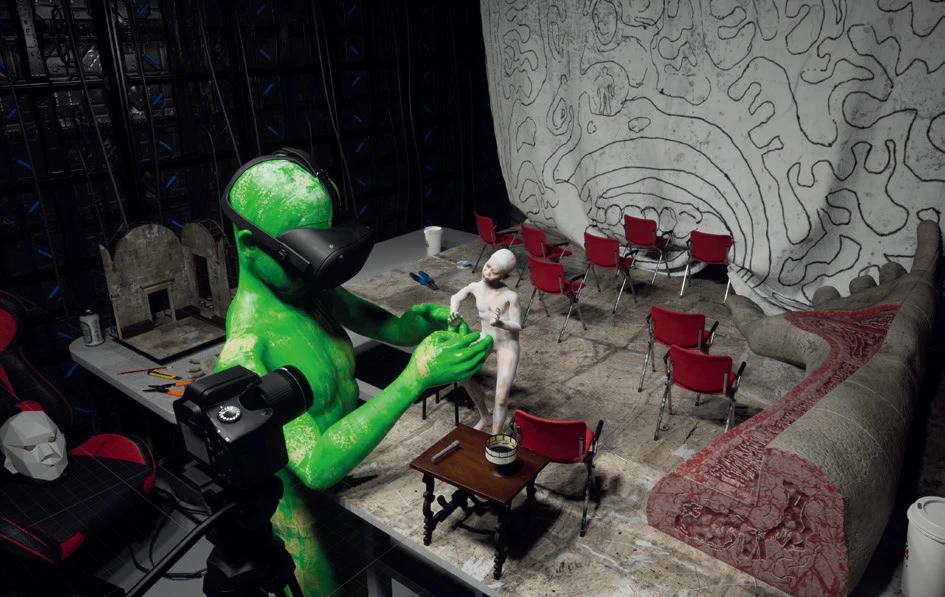
Li Yi-Fan, Screen Melancholy (screenshot), 2026, 60min, video installation © Li Yi-Fan. Courtesy of the artist and TFAM of Taiwan Collateral Event 2026
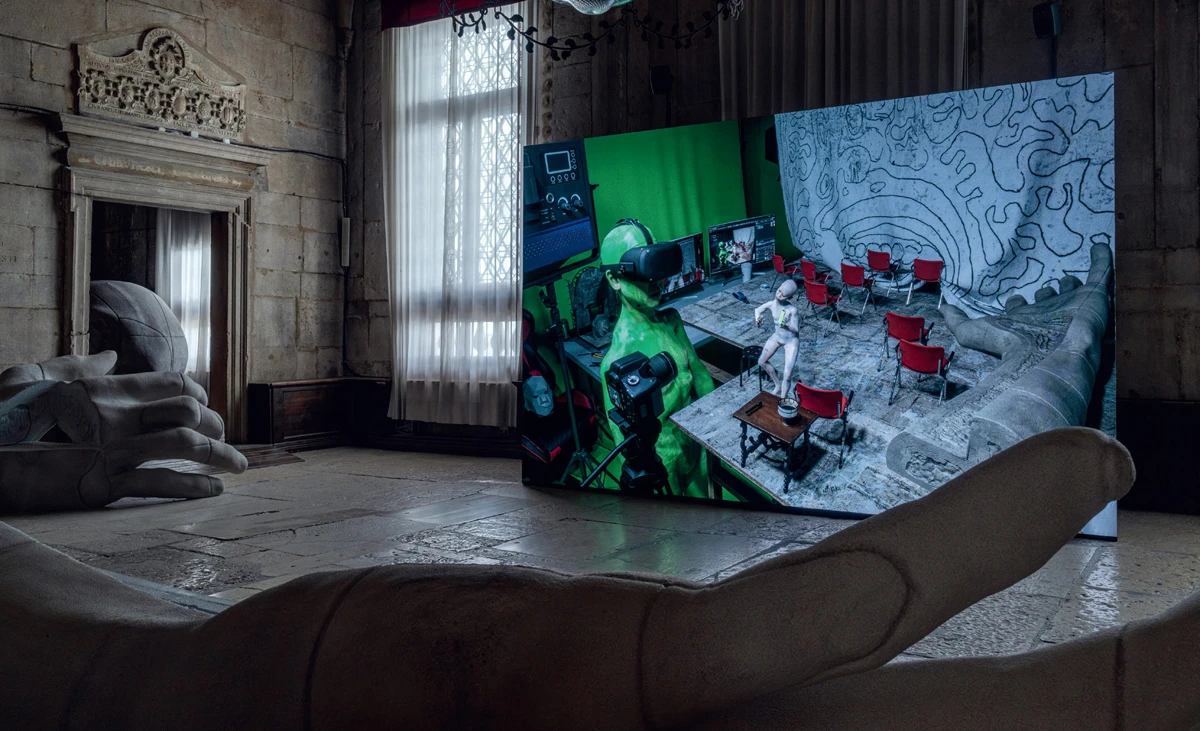
Screen Melancholy:Li Yi-Fan, 2026 © Li Yi-Fan. Courtesy of the artist and TFAM of Taiwan Collateral Event 2026
I realized that the museum's architecture seemed to recede in order to make room for the experience. No one crossed that room quickly. Some remained there absorbed, sitting or leaning on the sculptures; others preferred the floor or stood, while the video continued its course without announcing a beginning or an end. There was something in that installation that suspended the usual rush of a Biennale visit. People stayed there for the duration of the work before moving on to another pavilion. It was then that the scene brought back an image I had not accessed in many years. I returned to the memory of the neighborhood video rental store. I saw the children again, crowded together in the half-light, their eyes fixed on the television tube, feeling their way through the controls of a game whose language no one understood. As in Venice, no one was there merely looking at a screen. We remained together, trying to understand a system we did not yet know how to explain.
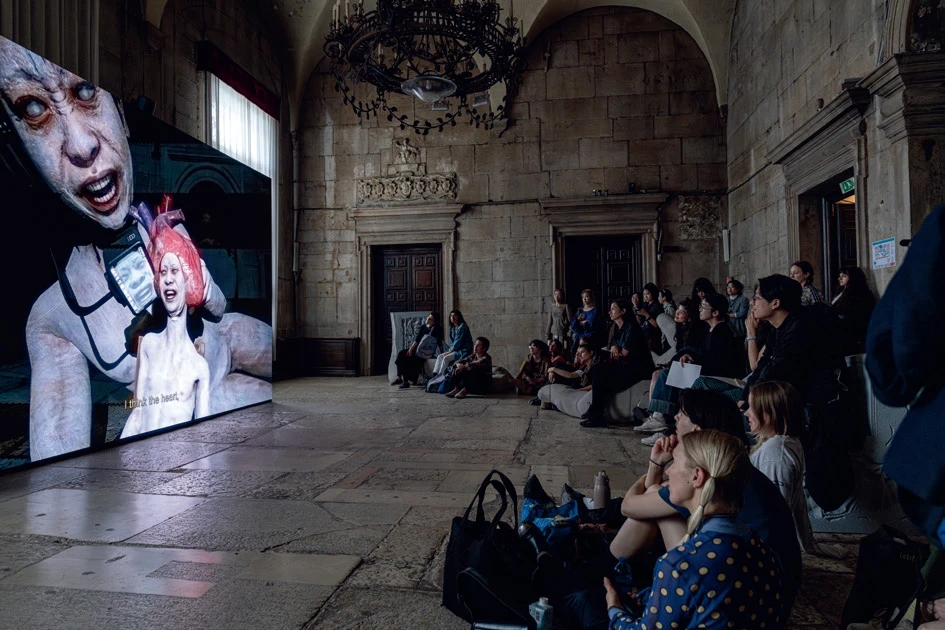
Screen Melancholy:Li Yi-Fan, 2026 © Li Yi-Fan. Courtesy of the artist and TFAM of Taiwan Collateral Event 2026
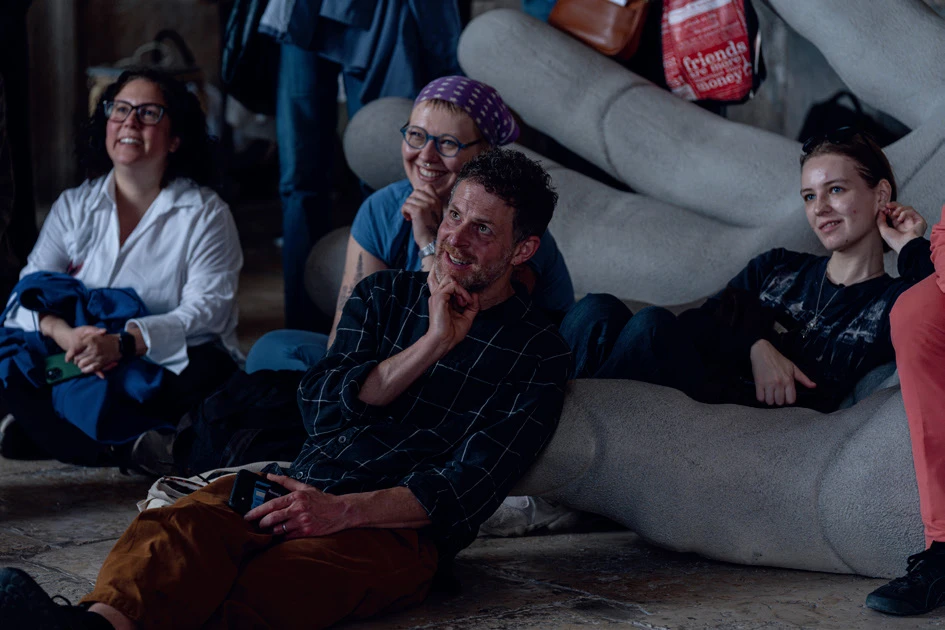
Screen Melancholy:Li Yi-Fan, 2026 © Li Yi-Fan. Courtesy of the artist and TFAM of Taiwan Collateral Event 2026
At the turn of the twentieth into the twenty-first century, the floor of the video rental store was our place of discovery; in Venice, seated among the fragments of bodies scattered through the Palazzo delle Prigioni, I recognized that same disposition toward images. Li Yi-Fan's work does not simply ask us to look at it, but to remain within the time it constructs. Faced with a digitalized world so deeply fused with our own, I understood the connection Raphael Fonseca proposes in his curatorial approach to Dürer's engraving Melencolia I (1514). In the engraving, the melancholic figure remains surrounded by instruments of geometry, science, and art, unable to fully organize the world around her. In Screen Melancholy, those instruments seem to reappear in another form: graphic engines, avatars, algorithms, and interfaces. They do not dispel uncertainty; they merely give it a new language.

Albrecht Düre, Melencolia I , 1514. Courtesy of The Metropolitan Museum of Art
Finally, I believe there is a difference between understanding a system and inhabiting it. The video games of childhood taught us this difference intuitively. Yi-Fan's work seems to recover it in another context: his images do not allow themselves to be consumed quickly because they were not built merely to be seen, but to be traversed. Meaning does not precede the experience; it emerges through it.