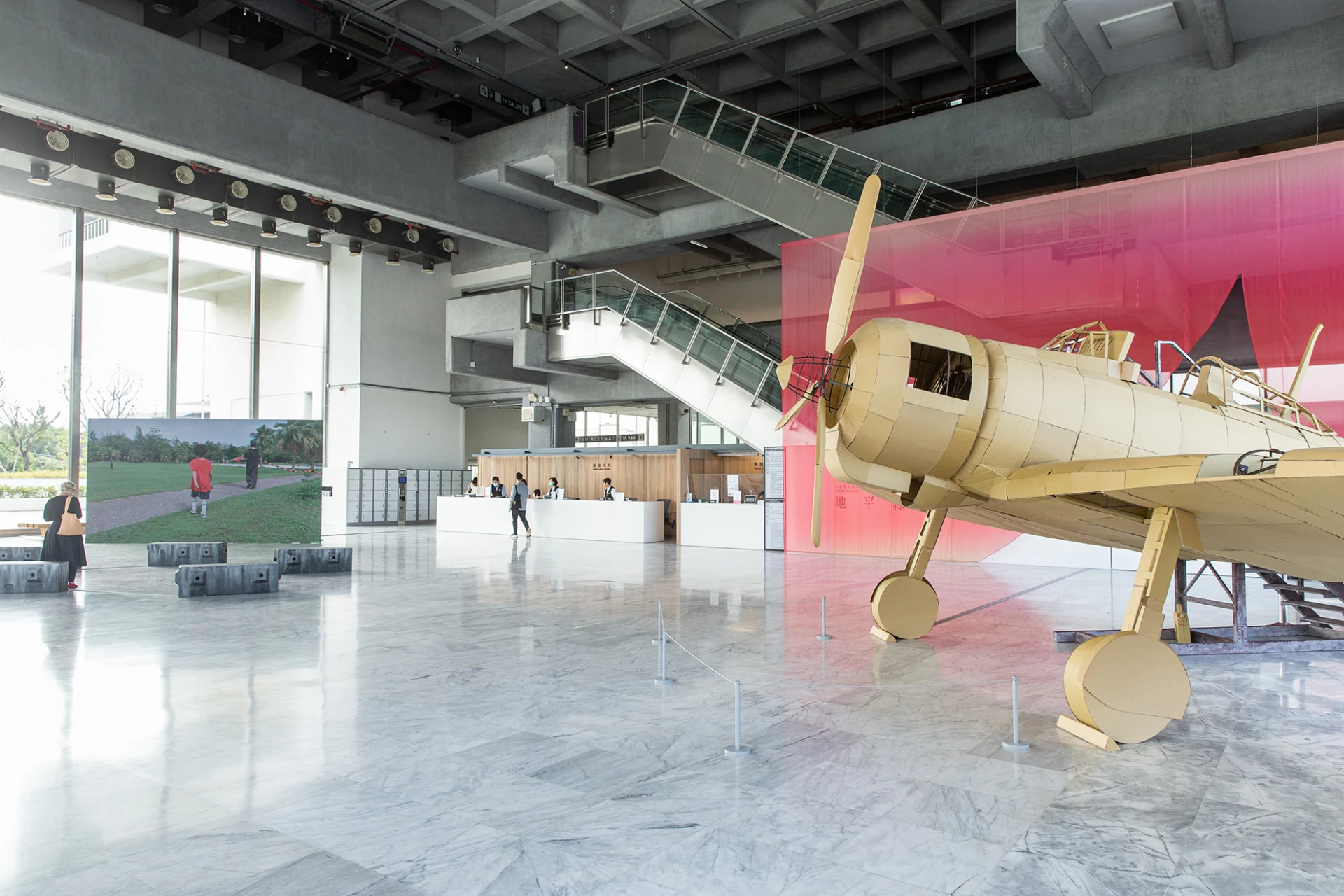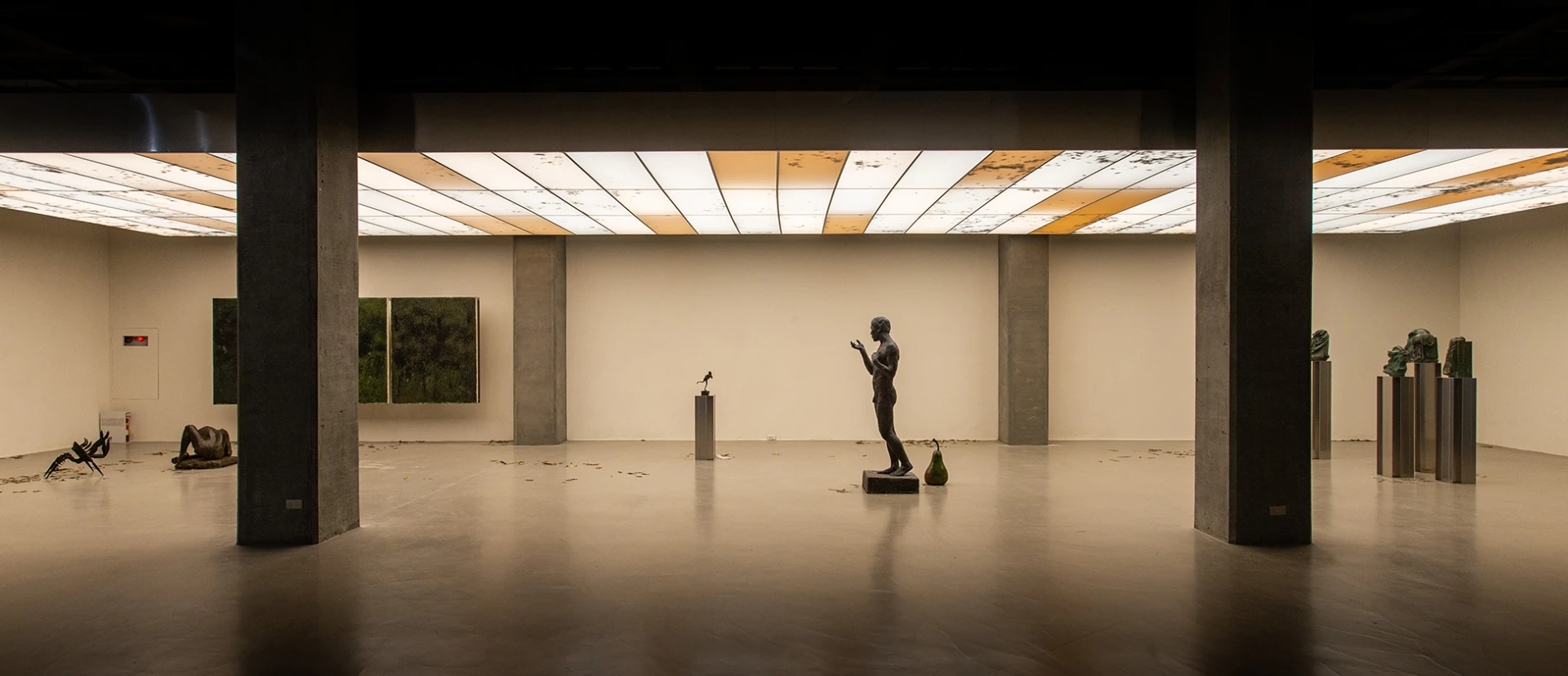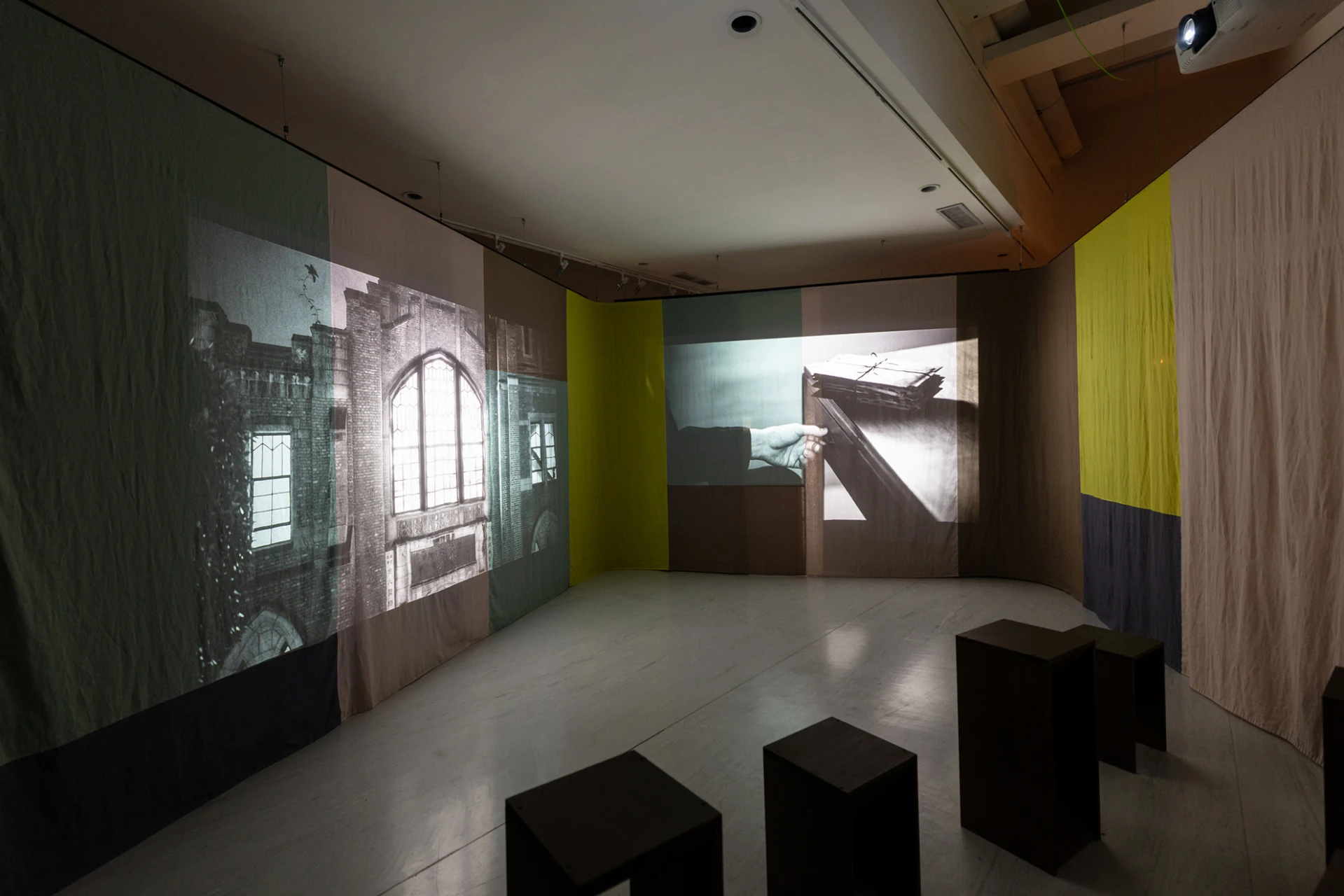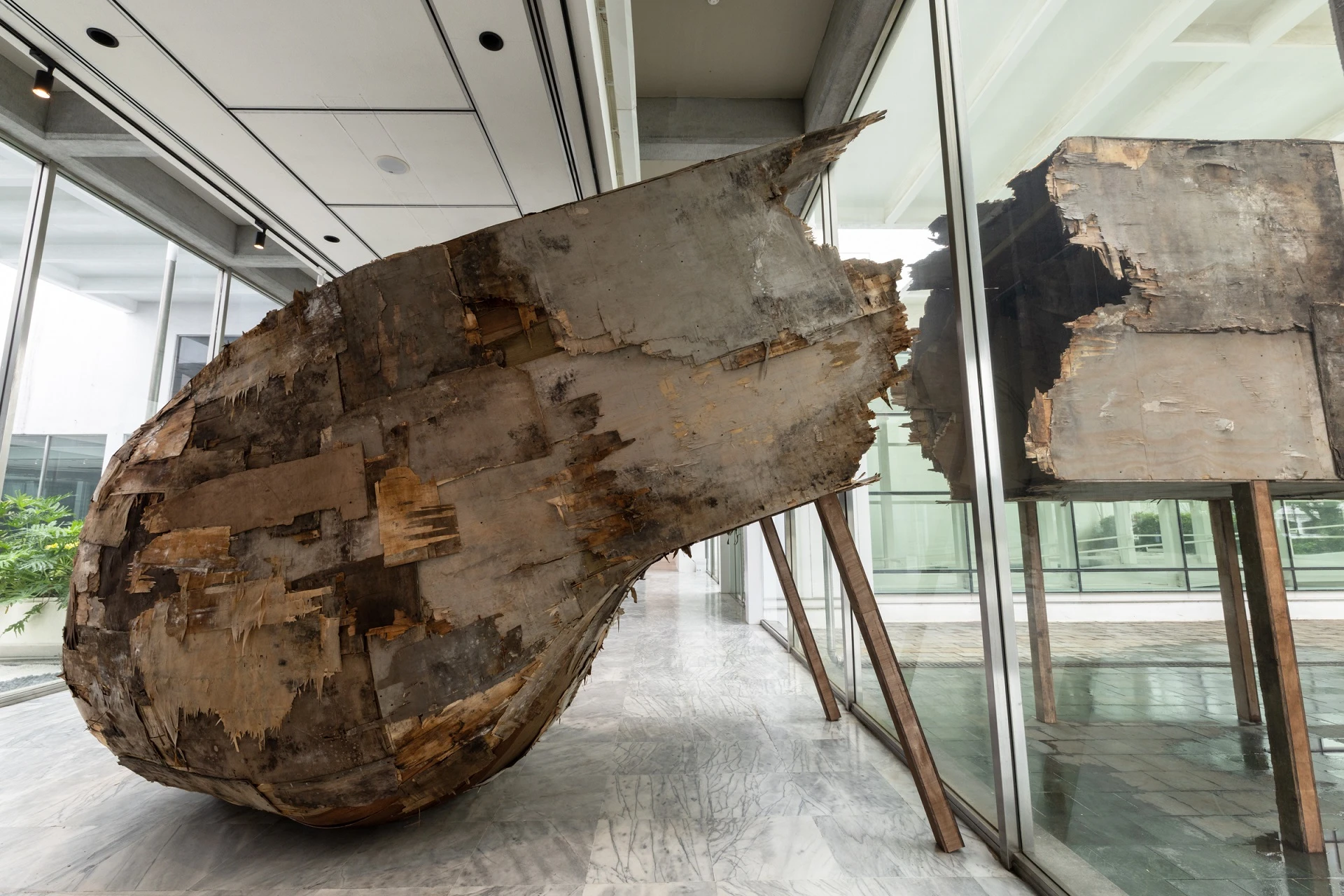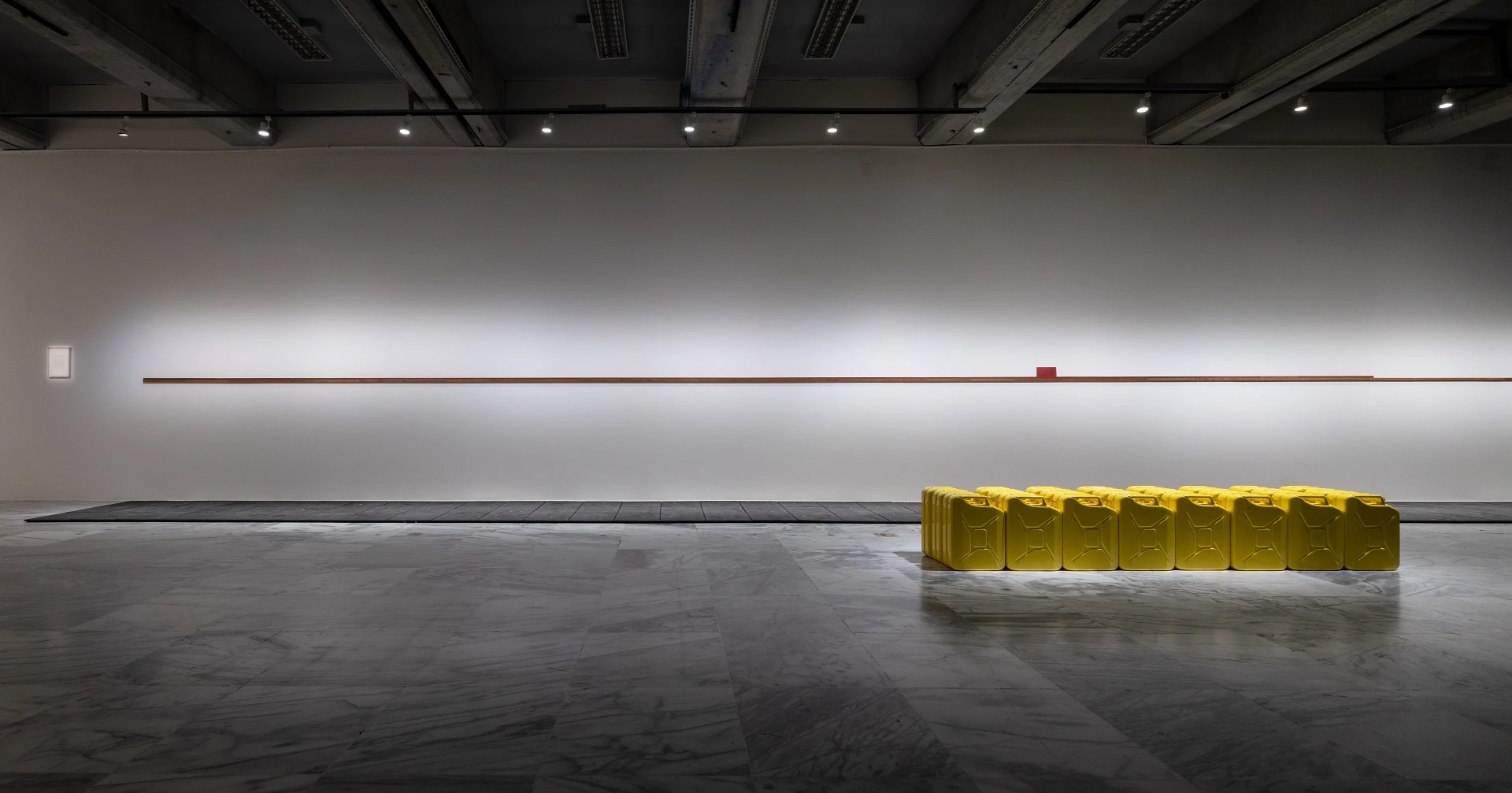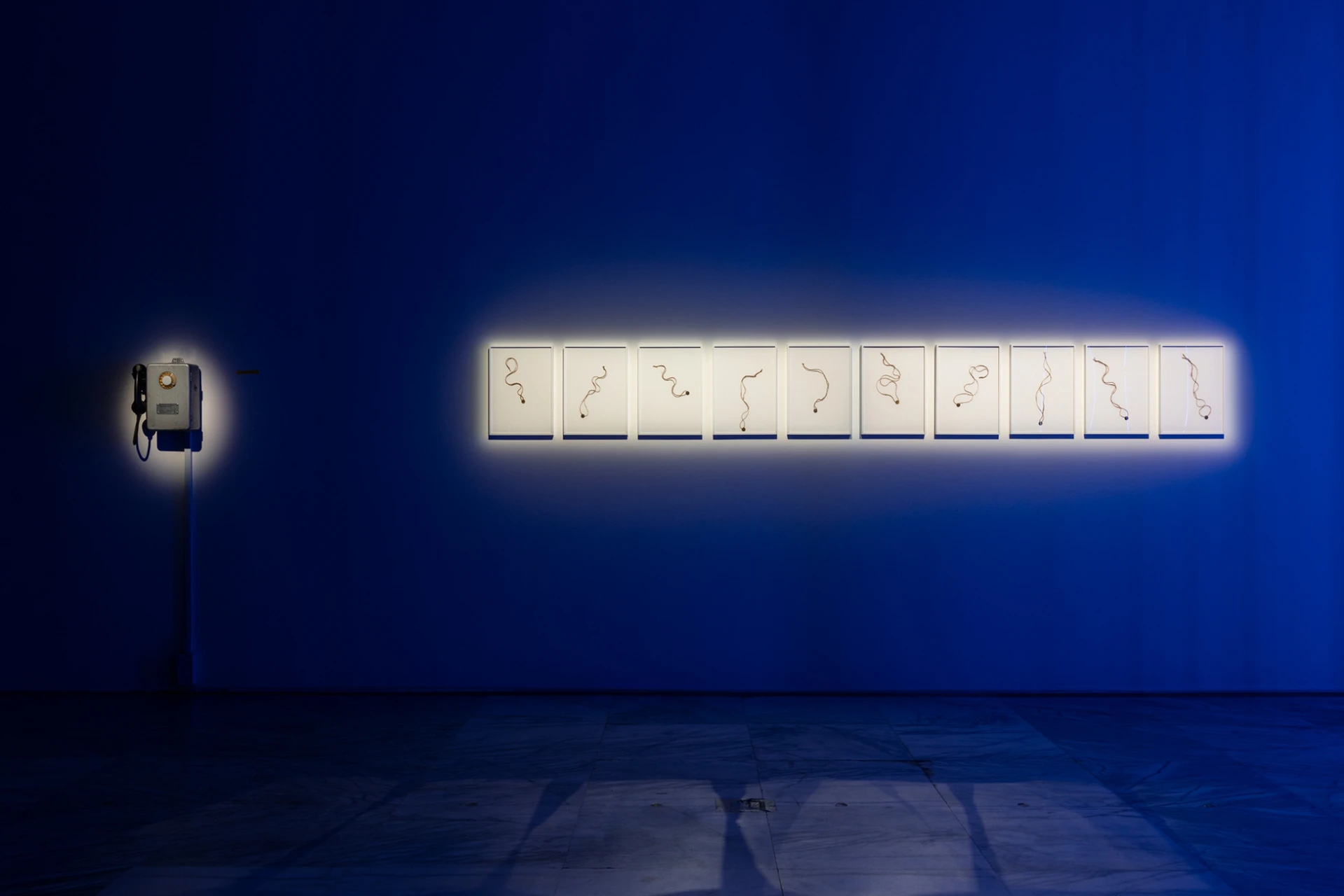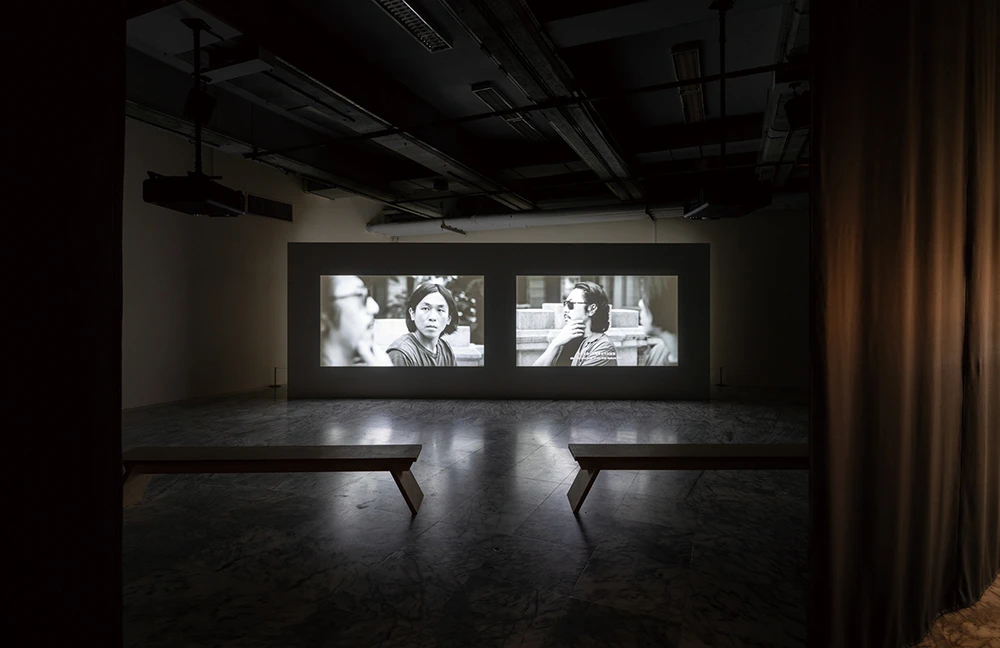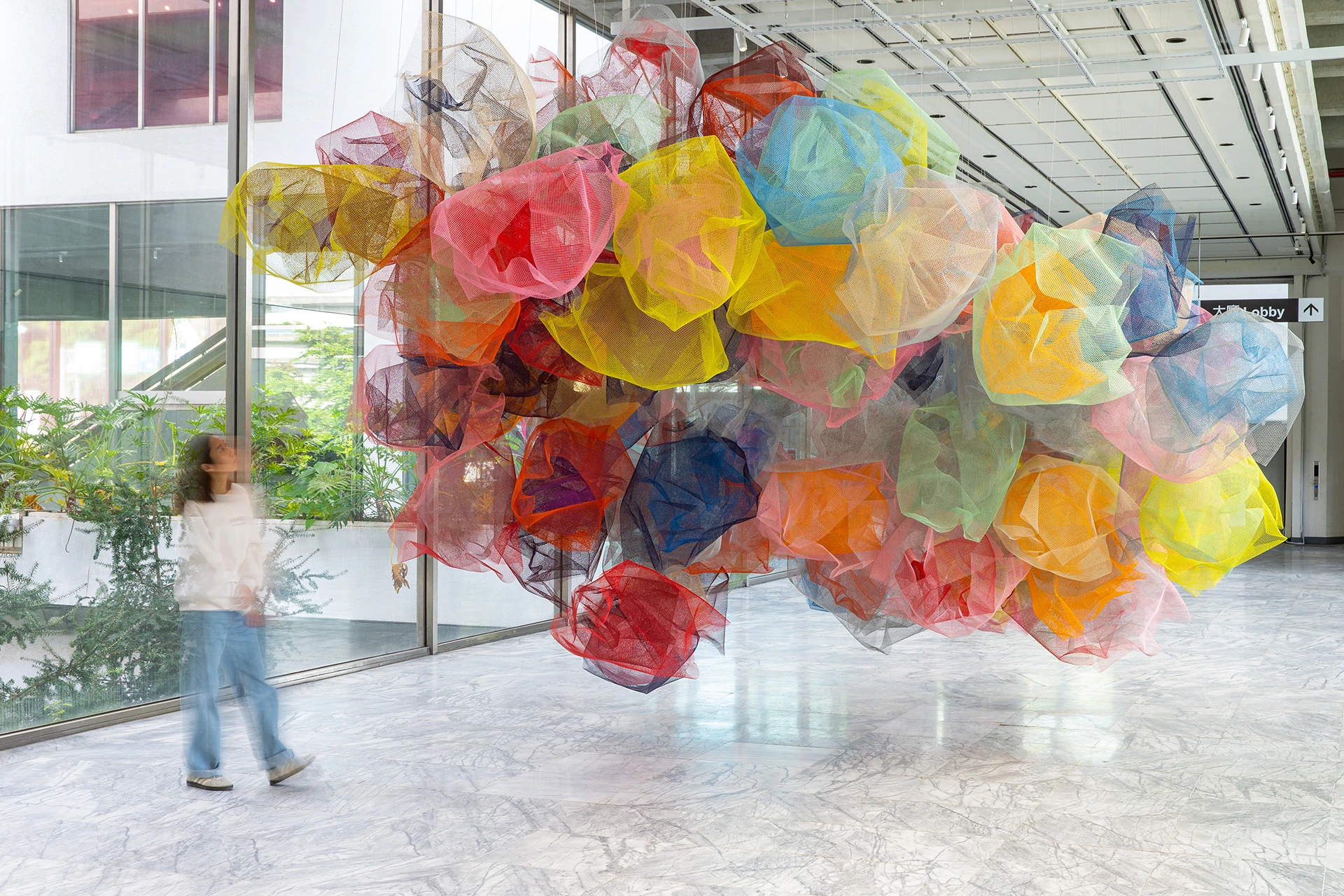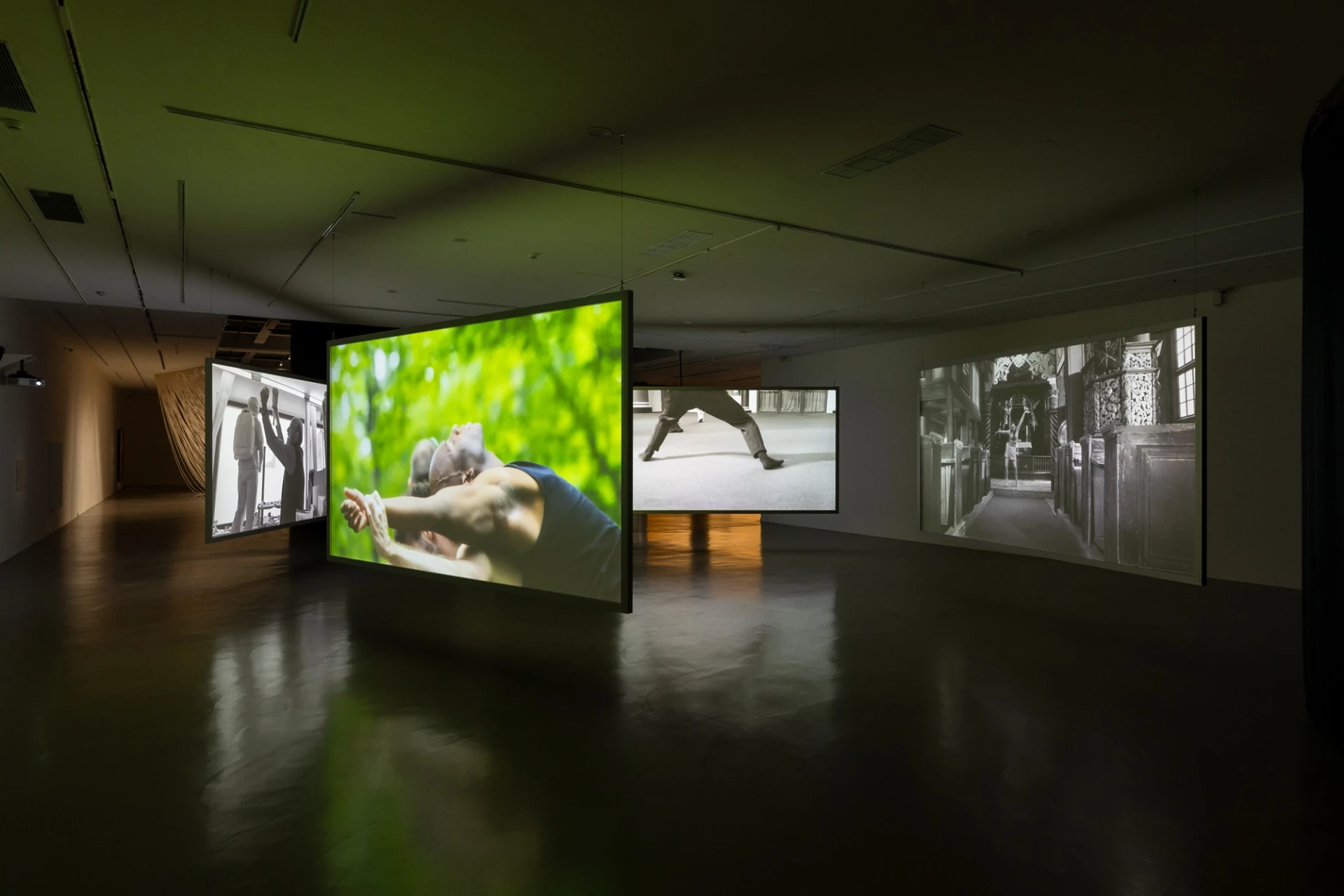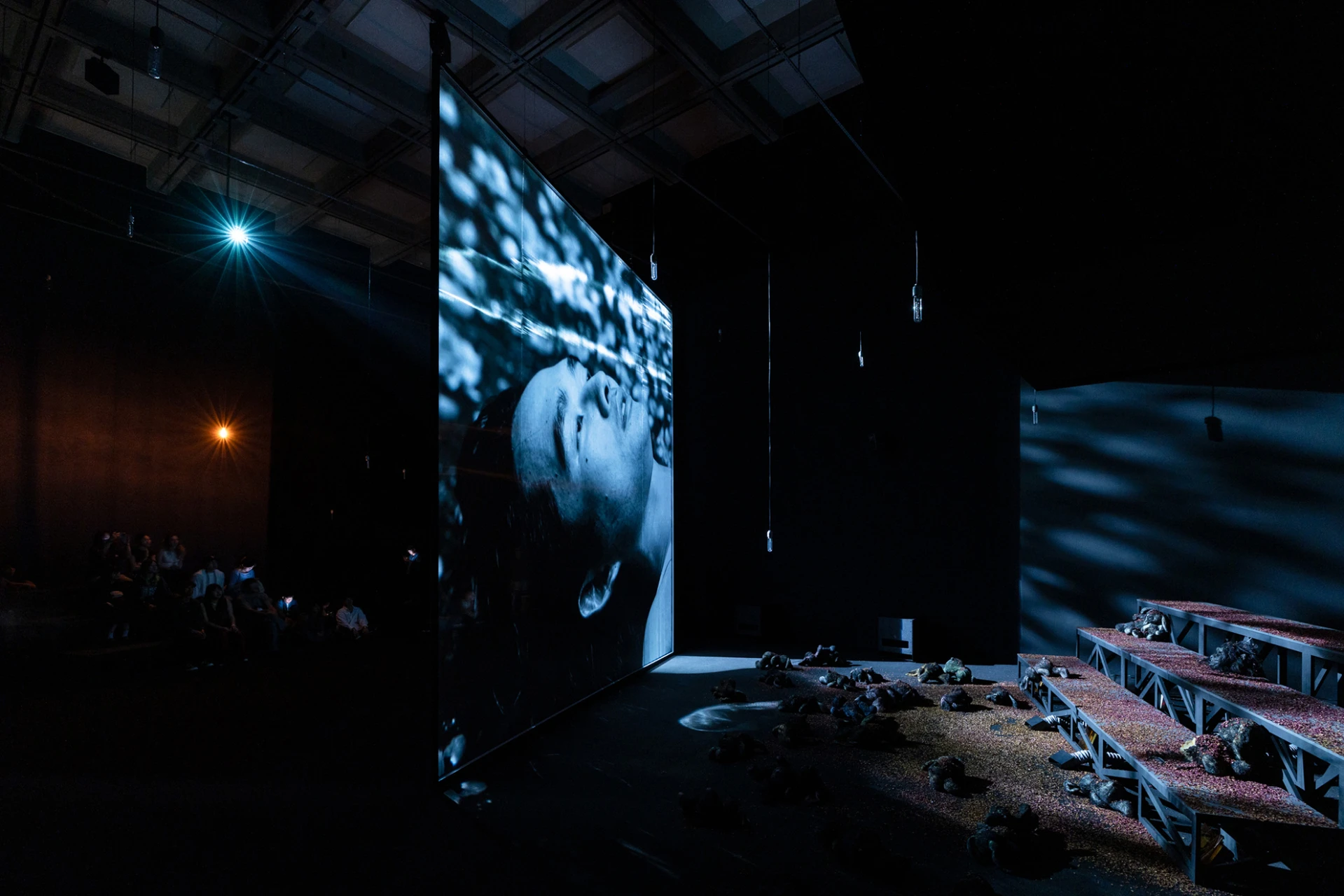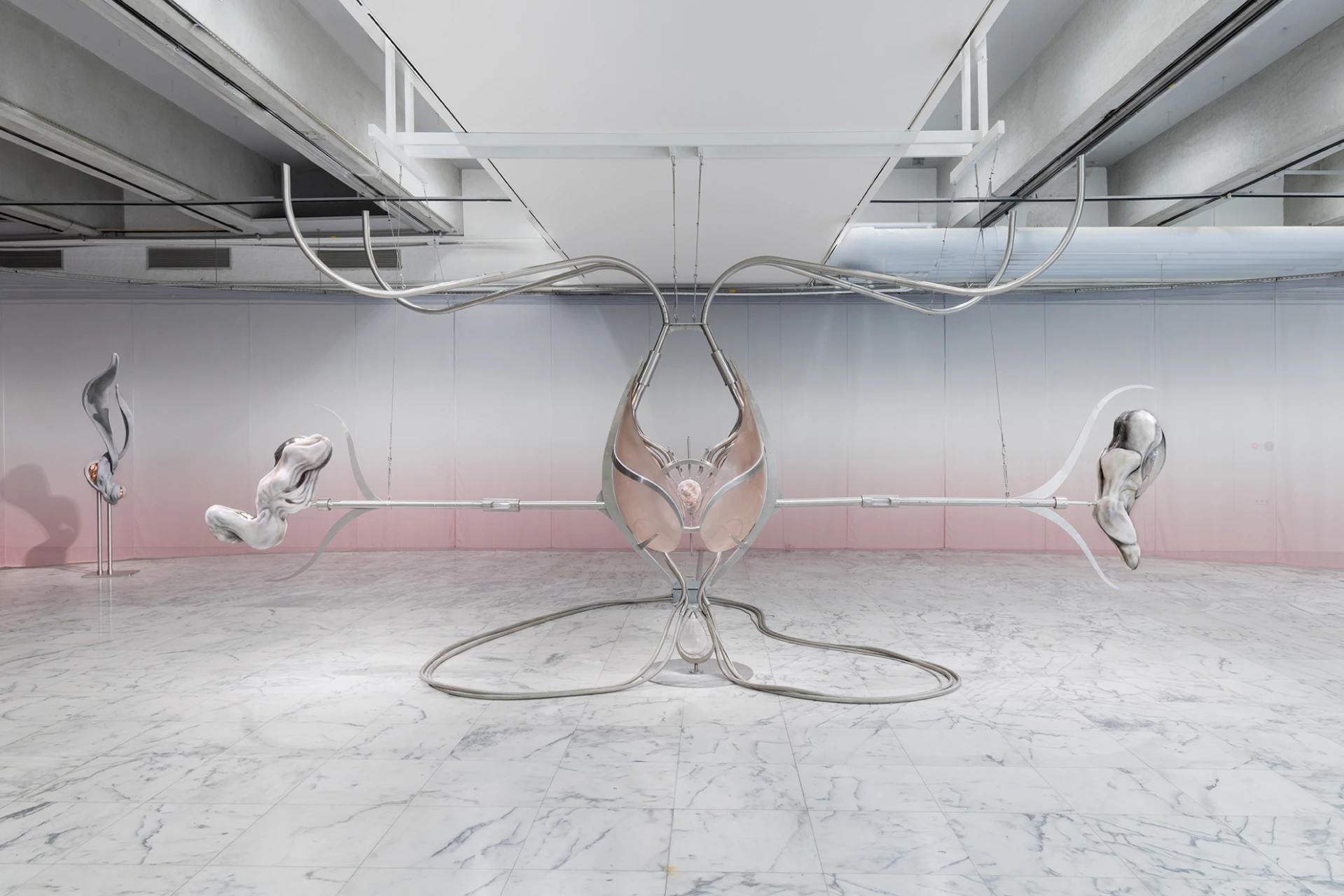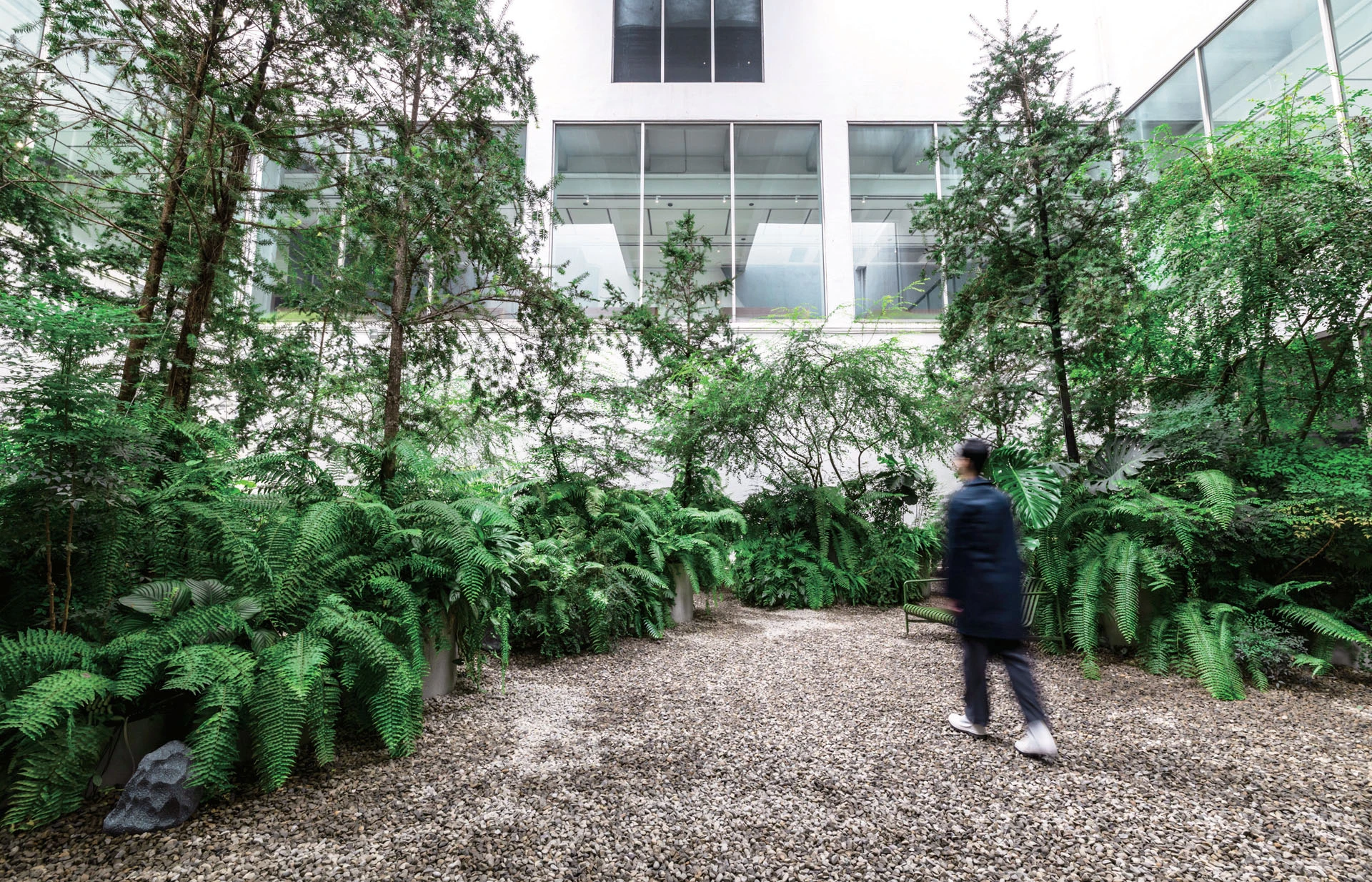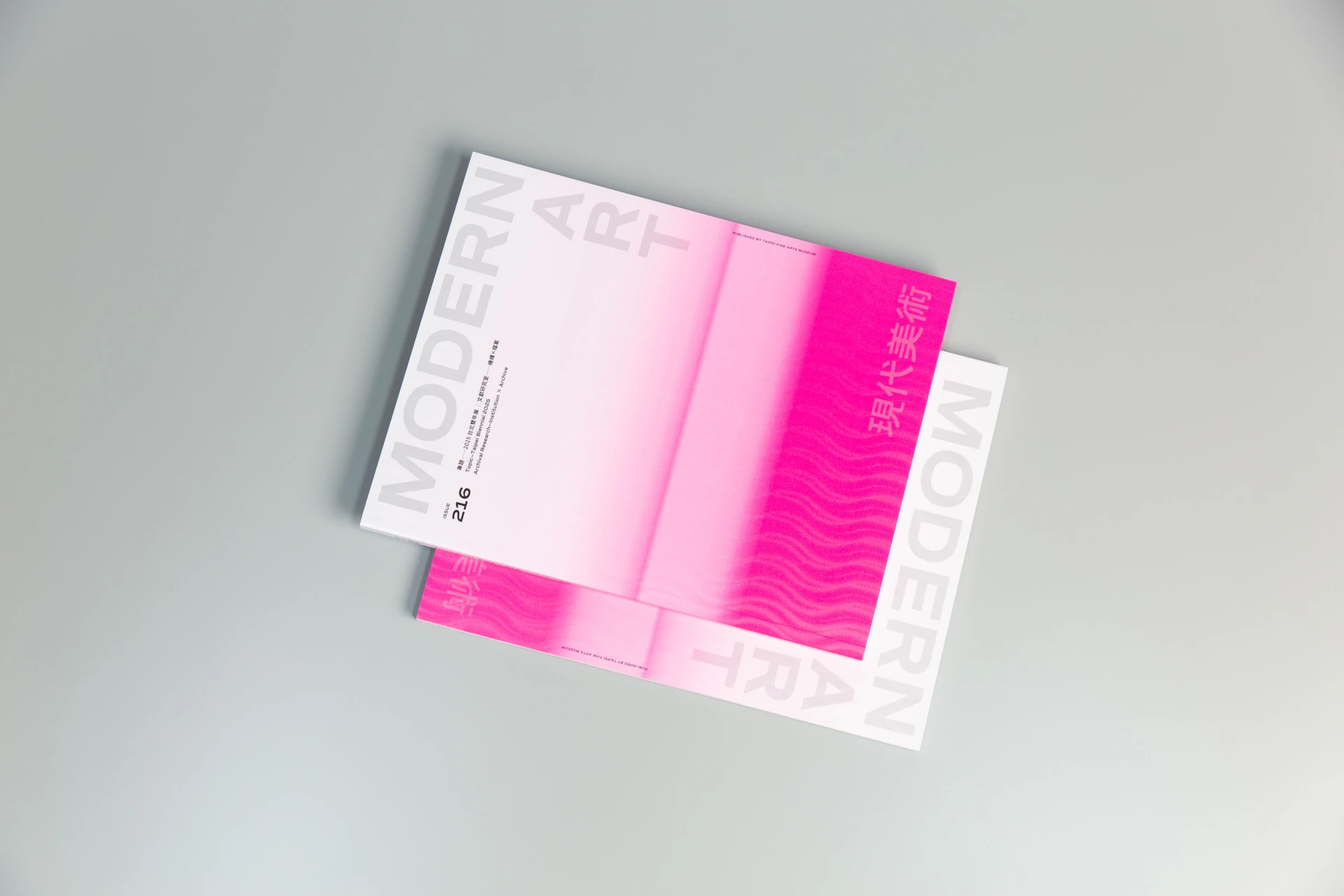
2025 台北雙年展「地平線上的低吟」於 11 月揭幕,以「思慕」作為貫穿展覽的驅動力,指向個體與他者、家國與歷史、當下與未來之間錯綜而未竟的關係。本期《現代美術》即以此為起點,嘗試將展覽所觸發的感知、提問與辯證,轉化為可被閱讀與思考的文本場域,並透過評論、研究與訪談等多重書寫形式,梳理藝術實踐、策展方法與知識生產之間的交會關係,探討當代美術館在社會與歷史縫隙中所扮演的角色。
「2025 台北雙年展」專題分為三個層次展開。首先,本刊回應此屆雙年展論壇所提出的六個關鍵字——思慕、歸屬、失調、歷史、觀看、合作,邀請論壇主持人將座談中的討論延伸為對整體展覽的分析與觀察。耿一偉指出,展覽以文學性的「思慕」與「低吟」取代理論化與宏大敘事,引導觀眾進入情動經驗,展現當代策展朝向微觀政治與感知實踐的轉向。劉文則從「思慕」出發,梳理凝視與語音所構成的感官政治,說明展覽如何將圍繞認同與權力的作品,轉化為跨時代、跨身體、跨地緣的共聽情動狀態,進而召喚一種回返不在場歷史的聆聽倫理與未來想像。阮慶岳對照台北與上海雙年展,指出兩者皆有意避開宏大政治敘事,使藝術重新回到個體、日常與內在感知,為觀眾提供重新聆聽藝術與自我的契機。
其次,專題邀請三位研究者提出不同的展覽觀看視角。蘇嘉瑩將展覽視為一部大型劇場製作,從「物件—空間—布幕」的表演性編排與多幕結構切入,說明尪仔、日記與腳踏車所引出的「思慕」,如何轉化為觀眾在光、聲、氣味與動線中的身體經驗,並於歷史檔案與藝術家生命經驗的交織中,開展一條兼具倫理自覺與開放詮釋的感知路徑,宛如一場紙上的深度導覽。陳彥伶以「歸屬/之間」的悖論為核心,透過斯洛特戴克的「球體」意象,解讀巴希奇、哈透姆、葉爾莫萊娃與托波利迪斯如何將游移與離散本身,轉譯為可棲居的歸屬實踐。徐詩雨則分析烏爾巴諾、阿讓諾度才與高田的作品,如何透過「沉浸」技術調度觀者的感受,形構被牽引、被擾動,甚至被觸碰的作品敘事與在場身體經驗。
第三部分為藝術家訪談,呈現作品生成的內在過程與思考軌跡等第一手資料。羅珮慈指出邱子晏如何在真/偽之間重組歷史事件,將官方史料轉化為可被身體經驗的記憶複調,以回應「歷史感的空缺」。吳謹爲書寫澤拓藉由「一臂之遙」的親密距離,透過記憶的錯置、層疊與想像,思考時間的位移與「曾經有也沒有」的未來記憶。洪思吟則以展覽中介者的角度,描繪在策展概念、藝術家限地製作與展呈之間的溝通與調度,如何促成奧利維拉《雜草》在台北場域中的生成。吳謹爲指出王耀億在《合拍片》中藉由「磨磚成鏡」的寓言,反思現代性夢想如何在歷史重複、技術幻象與徒勞之中被不斷製造與傳承,並凝結為一場未完成的夢。蘇嘉瑩的訪談則呈現王湘靈如何以「延音」為方法,將文學、音樂與環境聲音轉譯為一個需被主動聆聽的花園聲場,使作品成為一種與時間共處、喚醒潛抑記憶並回應展覽主題的感知經驗。
本期「文獻研究室」以「機構 × 檔案」為題,回應未曾退卻的檔案熱潮,關注文化機構如何重新檢視其典藏制度與權力結構,並討論檔案制度化過程在主題、方法與社會文化層面所顯現的缺口,以及機構如何透過反身性實踐嘗試鬆動既有框架。官妍廷以鹿特丹新學院「另類典藏」計畫為例,說明國家建築檔案如何透過性別、酷兒與去殖民視角的工具化實驗,重新調整既有典藏邏輯,使典藏成為可被社群參與、修復與再書寫的過程。蔡雅祺則以國家人權博物館為案例,分析私人受難者檔案在被「文物化」後,如何在現身與限制之間,映現出國家與個人之間複雜且充滿張力的記憶政治。
綜觀本期的評論、訪談與論述,「思慕」不僅作為展覽的核心概念反覆出現,也逐漸在書寫與閱讀之間生成一種隱約的連結。期望在編務作業的提綱挈領之外,仍能為那些尚在醞釀、仍於遠方震動的感受與問題,保留延續聆聽與思考的空間,使美術館的經驗得以脫離展期,在紙本與鉛字之中持續生成並回響。
Opened in November, the Taipei Biennial 2025: Whispers on the Horizon is driven by yearning, a core force that runs through the exhibition to highlight complex and unresolved relationships between the individual and other, nation and history, and past and future. The topic Taipei Biennial 2025 featured in this issue of Modern Art was gradually formed during the exhibition's production and opening forum's preparations by extending the former's propositions and latter's dialogues into a discursive field for close reading. Through critical engagement, research, and interviews, intersections between artistic practices and knowledge production are revealed, and the societal roles of contemporary art museums are carefully considered.
The topic Taipei Biennial 2025 is organized into three interrelated sections closely aligned with the forum's core conceptual axes: yearning, belonging, dissonance, history, seeing, and collaboration. The first section comprises essays by forum moderators, who extend forum dialogues based on their respective research areas and professional practices to offer integrated observations and analyses of the exhibition. Drawing on his experience in theater and curating, Yi-Wei Keng examines how the exhibition displaces theoretical frameworks and grand narratives in favor of literary modes of yearning and whispering, as well as how the exhibition's visual composition guides visitors toward affective experiences. From the perspectives of affect studies and geopolitics, Wen Liu expounds on the affective politics of yearning, examining how gaze and voice in the exhibition transform works concerned with identity and power into shared affective states of listening that transcend generations, bodily presence, and geography. This process further calls forth an ethics of listening oriented toward absent histories and a renewed imagination of possible futures. Based on his long-term engagement with literature, art, and architecture, Ching-Yueh Roan observes that the exhibition deliberately avoids grand political narratives, recalibrating the viewing scale to focus on the individual, daily life, and inner perceptions. Approaching the exhibition from distinct vantage points, these three essays collectively examine contemporary curatorial shifts toward micropolitics and sensory practices while casting light on one another.
In the second section, readers are offered certain points of entry into Taipei Biennial 2025 due to its scope and intricacy. This choice was made despite the exhibition's avoidance of complex theoretical frameworks, a strategy meant to grant viewers greater authority and freedom to interpret works and make connections. Exhibition team member Chiaying Su sees Taipei Biennial 2025 as a theatrical production in several acts. As such, she creates an in-depth guided tour on paper, using an "object, space, curtain" arrangement to transpose yearning as a bodily experience for spectators, who are influenced by light, sound, smell, and visitor flow. Contemporary visual culture researcher Yen-Ling Chen starts from the paradoxical forum subtopic Belonging / In-Between to integrate German philosopher Peter Sloterdijk's spheres imagery into an inquiry on how artists transform movement and diaspora into practices of habitable belonging. Independent curator Shih-Yu Hsu focuses on immersive experiences in the exhibition through interviews with the artists and research into their earlier works, as well as through analysis of how artistic techniques and narratives guide viewer experiences and shape concrete, complex states of bodily presence.
The third section comprises artist interviews. As a significant proportion of work in the exhibition is commissioned, the editorial team took advantage of the artists' visits to Taiwan to arrange interviews. The team also selected mid-career Taiwanese artists who had previously held solo exhibitions at the Museum for in-depth conversations, extending archives of their creative trajectories and preserving valuable first-hand materials for future researchers. This strategy takes readers behind the scenes of the exhibition, offering a focused view of how conceptual frictions arise and decision-making is shaped by artistic practice, curatorial concepts, the museum setting, and exhibition intermediaries. The interviews conducted and edited by Pei-Tzu Lo, Jin-Wei Wu, Selene Hung, and Chiaying Su make complex behind-the-scenes processes accessible to readers by detailing how five artists have developed their work through history, memory, time, space, and sound.
In addition, the theme Institution x Archive in this issue's Archival Research feature responds to the unabated surge of the archival turn with its focus on how cultural institutions reevaluate their collection systems and authority mechanisms, address gaps in archival systematization processes, and explore possible destabilization of existing frameworks through reflexive practices. Starting from the project Collecting Otherwise at De Nieuwe Academie initiative in The Netherlands and the program "Victim Archives: Artifactualization and Representation" at the National Human Rights Museum in Taiwan, Yen-Ting Kuan and Ya-Chi Tsai examine the politics and institutional practices of archives to reveal other analytical layers through which museums engage with history and memory.
This issue of the journal ties an exhibition, forum, and publication together to open multiple avenues for audiences to engage with art. These avenues enable different sensory experiences and ways of thinking to engender subtle and sustained connections. In addition to providing editorial guidance, this issue aims to preserve space for ongoing listening and reflection on feelings and questions that are still incubating and resonating in the distance, allowing museum experiences to extend beyond the exhibition period and continue to unfold through printed materials.