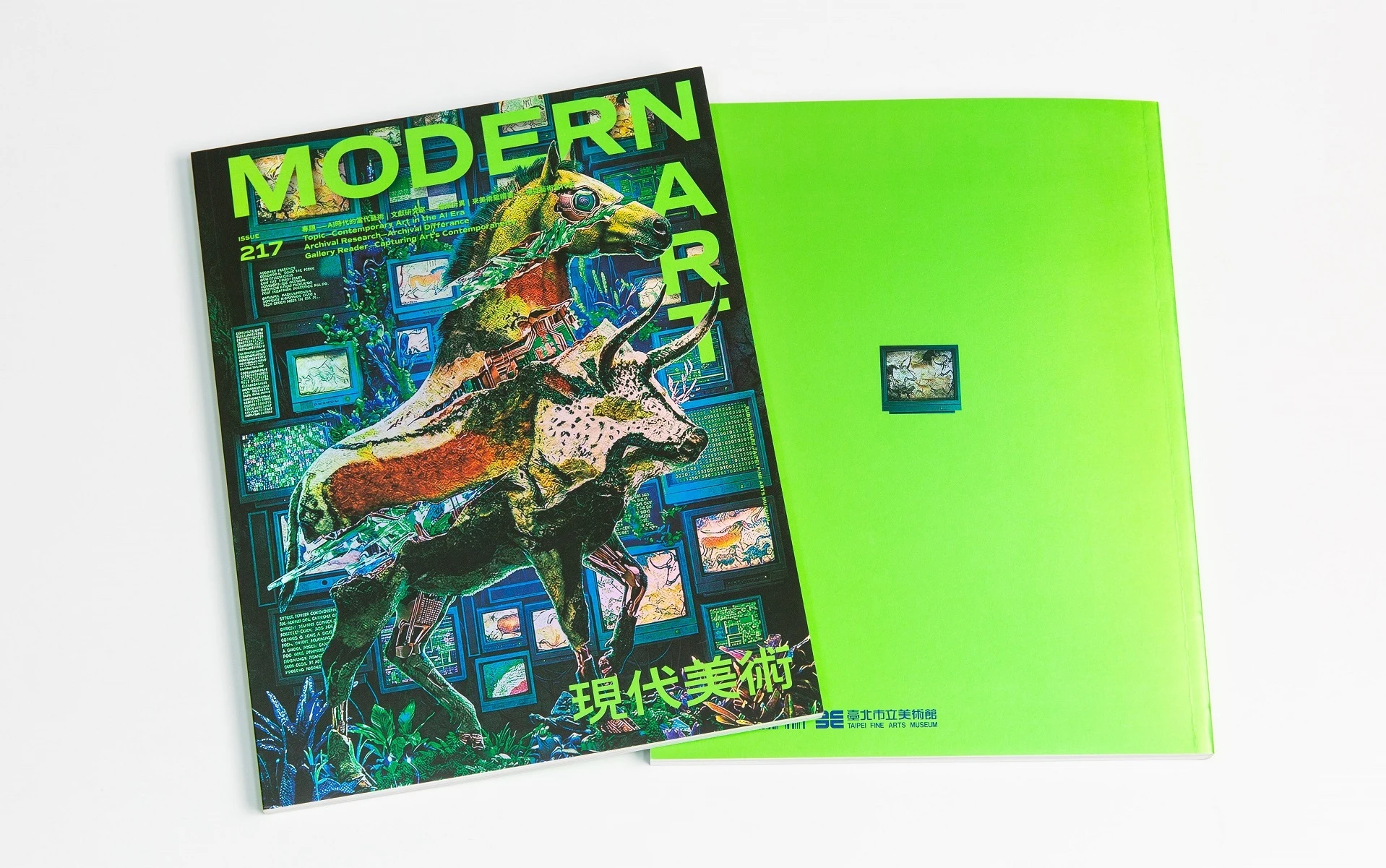
在談AI人工智慧時,它的歷史座標,往往會被理所當然地直接錨定在資訊科學史或數位科技發展史的長流之中,本期專題「AI時代的當代藝術」則企圖把AI拉回藝術史與當代藝術脈絡,找到新的座標,看待身處的AI時代、當代藝術現象,由藝術新面貌重新感知藝術的本質。
若2023年可謂「生成式AI元年」,AI席捲而來,深入全球與生活日常的各個環節,然而AI絕非橫空出世,藝術史學者劉京璇帶我們重回100年前的藝術運動與創作,從自動性與偶然性討論連結AI的藝術特質;任教於荷蘭的官無名(Florian Cramer)深入淺出的入門須知,提供讀者觀眾認識理解AI運作的機制與限制、在藝術創作上的應用及其衍生問題;另有一篇「隱藏版專文」,堪稱AI時代當代藝術的哲學觀察與教戰手冊,由於本期版面限制,編輯部擇期刊出,請密切鎖定「現代美術+」網站。
AI科技日新月異,時代容顏變幻莫測、稍縱即逝,我們好似瞎子摸象。透過與藝術家對話嘗試梳理出AI時代的切片與拼圖,許亞琦訪談視覺藝術家希朵.史戴爾(Hito Steyerl),她去年剛出版的《媒介熱》(Medium Hot),長期觀察AI與演算法如何改變藝術創作與世界的關係;李佳霖訪談身兼展覽策劃的藝術家蔡宏賢、蔡奇宏;徐詩雨訪談四位年紀相仿但創作型態各異的四位青壯輩創作者王連晟、吳其育、陳乂、魏澤;三篇訪談除了談論他們眼中的全球藝術思潮、現象與問題、策展與創作實踐,也觸及藝術教育議題。本期特別邀請漫畫家丁柏晏(筆名日安焦慮),指定命題但自由發揮,以他擅長的夢境與科幻氛圍,幽默解嘲的方式,調侃當代人AI時代的精神焦慮。
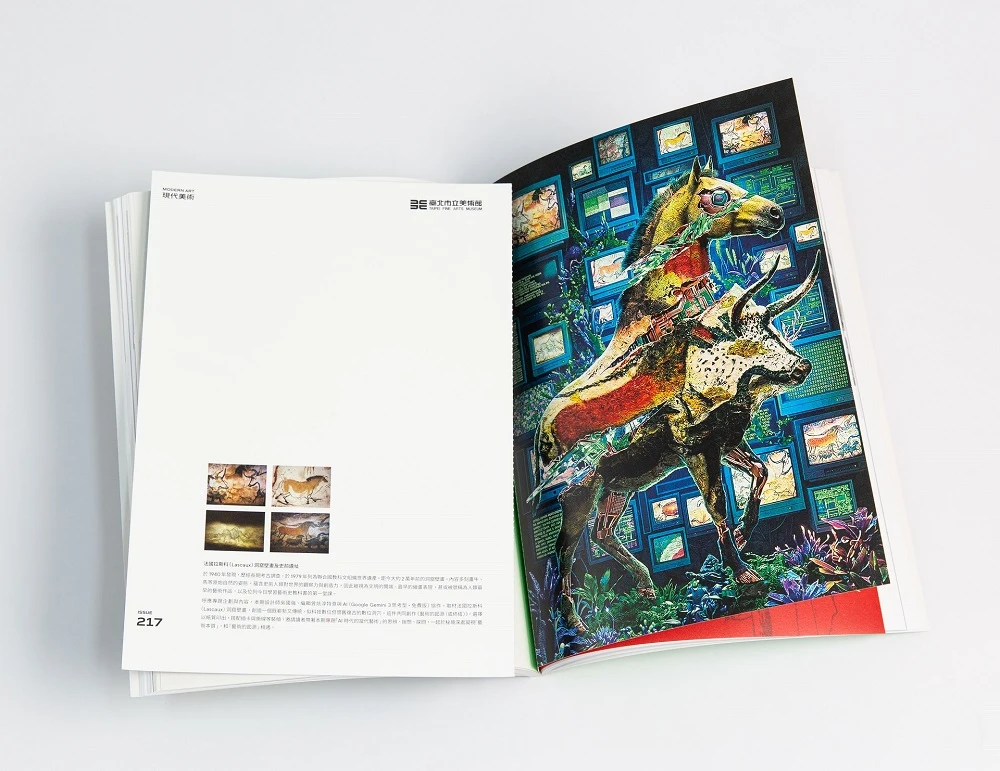
呼應專題企劃與內容,本期特意與AI(Google Gemini 3思考型・免費版)協作,取材法國拉斯科(Lascaux)洞窟壁畫,創造一個既嶄新又傳統、似科技數位但懷舊復古的數位洞穴,並於單元最末呈現這件共同創作《藝術的起源(或終結)》。這件作品特地挑選紙質印出,搭配插卡與撕線等裝幀,邀請讀者帶著專題內容的思辨、揣想、探問,一起於秘境深處凝視「藝術本質」,和「藝術的起源」相遇。
經典單元「文獻研究室」本期涉及實驗漫畫、當代藝術、建築三種看似不同的藝術領域,分別邀請漫畫研究者吳平稑、曾為亞洲藝術文獻庫工作的獨立研究者汪怡君、建築史研究者張晉維撰述專文:檔案,可以是雜誌刊物影響藝術創作脈動的抽象發行理念,可以是一個藝術空間,可以是一位在眼前交談、行走、繪畫的建築師。借用德希達的延異或譯為衍異(différance)的概念,三篇專文共同探究檔案文獻因時間演進,由於研究書寫,讓檔案的內涵意義擴延出更多層次。
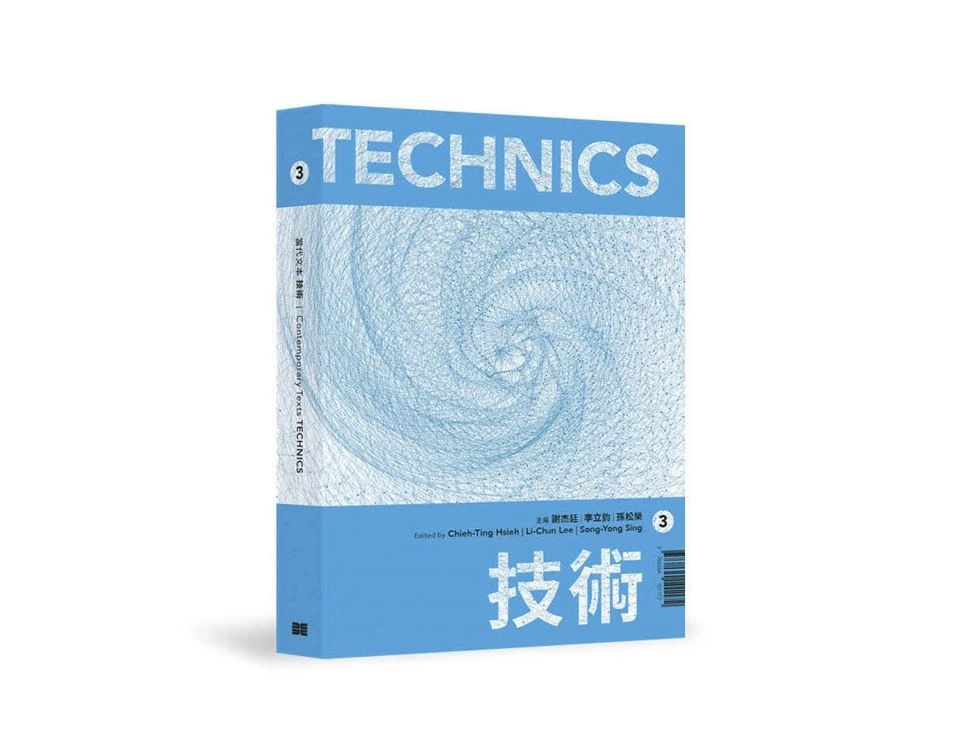
國內藝術類期刊雜誌幾少書評版面,本期新開闢書評單元意義非凡。取名為「來美術館讀書」(Gallery Reader),寓意美術館在當代有著更多元的功能及意涵,「來美術館」不限於看展,美術館與展場都可是思想與頭腦激盪的絕佳場域。北美館的讀本(Reader)系列出版計畫「當代文本選集」去年底推出第三冊《當代文本:技術》,為美術館針對特定主題集結經典文本、兼顧內容可讀性的專書,在此意義之外,這個單元希望邀請專家導讀,邀請導讀人及讀者一同成為美術館讀書人。本期首發,邀得執行台北雙年展多屆展務的蕭琳蓁、影像研究與創作者許鈞宜和藝術史學者謝佩君為《雙年展:我們愛恨交織的展覽》(Biennials: The Exhibitions We Love to Hate)、《當代文本:技術》、《臺灣影形力:六個尋找電影的跨域影像藝術》撰寫書評。三本書涉及全球展覽機制、藝術與技術的哲學與思潮、臺灣動態影像藝術史建構,雖然關注主題、研究對象及書寫體裁截然不同,但共通的是都在嘗試捕捉藝術的當代性。
When we speak of artificial intelligence, we often reflexively anchor its historical coordinates within the long lineage of computer science or the evolution of digital technology. This special issue, "Contemporary Art in the AI Era," seeks instead to reclaim AI for the context of art history and contemporary art. It attempts to view our current era of AI—and the phenomena of contemporary art within it—through a new framework, re-perceiving the essence of art through its emerging manifestations.
The year 2023 could arguably be called the "Year One of generative AI." AI swept across the globe and permeated nearly every aspect of everyday life. Yet AI did not emerge out of nowhere. Art historian Ching-Hsuan Liu takes us back to artistic movements and practices from a century ago, examining the artistic qualities shared with AI through the concepts of automatism and chance. Teaching in the Netherlands, the scholar Florian Cramer provides an introductory guide that helps readers understand the mechanisms and limitations of AI, as well as its applications in artistic creation and the issues that arise from them. This issue also includes a "hidden feature,"– a philosophical observation and field guide for contemporary art in the AI era. Due to space limitations in the print edition, we will be featuring this piece separately at a later date. Please stay tuned to the "Modern Art+" website.
AI technology evolves at a breathtaking pace; its forms are protean, unpredictable, and often fleeting, leaving many people feeling like blind men trying to grasp an elephant. Through conversations with artists, we hope to piece together specific slices of the AI era. Ya-Chi Hsu interviews visual artist Hito Steyerl, author of last year's Medium Hot, on her long-term observations regarding how AI and algorithms have transformed the relationship between artistic creation and the world. Chia Lin Lee speaks with artist-curators Escher Tsai and Chi-Hung Tsai. Shih-Yu Hsu interviews four mid-career artists of a similar generation whose creative practices differ greatly: Wang Lien-Cheng, Wu Chi-Yu, Chen Yi, and Wei Ze. Beyond discussing global artistic trends, contemporary phenomena and issues, curatorial and artistic practices, these three interviews also touch upon the subject of art education. This issue also features cartoonist Ding Pao Yen (pen name Good Morning Anxiety), who uses his signature dreamlike and sci-fi atmosphere and humorous self-deprecation to poke fun at the spiritual anxieties of contemporary life in the age of AI.
In thematic resonance with our editorial focus, we deliberately collaborated with an AI– the Gemini 3 'Thinking' model (free version)-- to draw inspiration from the cave paintings of Lascaux. Together, we have crafted a 'digital cave' that is at once innovative yet traditional, high-tech yet nostalgic. Presented at the very end of this issue, this collaborative piece is titled "The Origin (or End) of Art." Specially selected for print in paper format and accompanied by card inserts and tear lines in its binding design, the piece invites readers—while reflecting, imagining, and questioning the ideas raised throughout the issue—to gaze deep into this hidden realm, where they may contemplate the "essence of art" and encounter once more the "origin of art.”
In this issue, our regular feature, "Archival Research," ventures into three seemingly disparate artistic realms: experimental comics, contemporary art, and architecture. We have invited comic researcher Ping-lu Wu, independent researcher Nicole Wang, formerly of the Asia Art Archive, and architectural historian Chin-Wei Chang to contribute essays. An archive can be many things: it might be the abstract publishing philosophy of a magazine influencing the pulse of artistic creation; it might be a physical art space; or it might even be an architect talking, walking, and drawing right before our eyes. By invoking Jacques Derrida's concept of différance, these three essays collectively explore how archival documents expand in meaning and complexity over time through the act of scholarly writing.
Art journals in Taiwan rarely dedicate space to book reviews, making the inauguration of this new section particularly significant. Titled "Gallery Reader," it reflects the idea that museums today serve increasingly diverse functions and carry broader meanings: "visiting a museum" is no longer limited to viewing exhibitions; the museum and its galleries can also be exceptional spaces for intellectual exchange and brainstorming. Late last year, the Taipei Fine Arts Museum (TFAM) released the third volume of its "TFAM Contemporary Texts" reader series: Contemporary Texts: Technics. This series is the museum's specialized effort to compile classic texts on specific themes while maintaining readability. Extending and expanding upon this spirit, this new section invites expert guides to lead us—along with our readers—in becoming "museum readers" ourselves. For this inaugural attempt, we have invited Kat Siao, who has served as exhibition manager for multiple Taipei Biennials; film researcher and creator Chun Yi Hsu; and art historian Pei-chun Hsieh to contribute reviews for Biennials: The Exhibitions We Love to Hate; Contemporary Texts: Technics; and Taiwanese Cineplasticity: Six Cross-Disciplinary Moving-Image Arts in Search of Cinema, respectively. Though these three books—covering the global exhibition mechanism, the philosophy and intellectual currents of art and technology, and the construction of Taiwan's moving-image art history—differ vastly in their subject matter, research objects, and writing styles, they are united by a common pursuit: the attempt to capture the contemporaneity of art.