
49
Me and my mom, you know, acted at the start of the war, because me and my dad and Maria, we had a plan that if the full-scale invasion started, we would, you know, get in the car and drive to the western part of Ukraine. And my mom, she was staying with my grandma in Vorzel, in the apartment of their own. And when I called her, you know, in the morning of the 24th, like, it was, I think, 6 or 7 a.m., 7 a.m., I think. And I told her, you know, that the war has started, we have to go, we have to leave somewhere. And she said, like, where? We have nowhere to go. You know, this is our home, you know our stuff is here, our cats are here, this is our apartment, why shall we go? You know we have no money to go anywhere. And I still think that it was better to evacuate and go anywhere at that point at the beginning of the war instead of staying under occupation and having, you know, these risks, these, you know, horrors that they experienced. But yeah, a lot of people unfortunately stayed at the beginning and, you know, still are staying in the occupied territories, because they have a sense of, you know, we don't really have anywhere to go. We're not really, you know, welcome anywhere. This is our land. This is where we grew up. This is, you know, where we belong, wherever, you know, all of our property is. And, um, I think it's still better to escape and find some opportunities, you know, if not abroad, just in other Ukrainian cities instead of…
Yes, I didn't until the very last moment. I didn't believe that it would happen. It's a bit funny. On the previous day, on the 23rd, I wanted to rent an apartment in Kyiv with my friend, so on the 23rd we went, you know, we saw the apartment, we talked to the owners, and we were talking, you know, between ourselves, should we really do this? Like, we don't really know how it's going to go. I think we're going to wait a couple of days and not sign the rent contract. And yeah, on the 24th, nobody really thought about which apartment to take and how long to rent it for. And yeah, that just shows that we, you know, everyone that I asked in February said that we don't really know. It's 50/50. We don't really know whether Russia is going to attack or not.
At the beginning, the first few weeks were all like a dream, you know. Everyone was, you know, very concentrated, very, like, I don't know how to say it, very put together and focused on, you know, doing everything very efficiently. But at the same time, yeah, there was a sense of this isn't really happening, you know. I remember during the first few weeks, I slept a lot. That's my stress response.
At first, when Maria and Dad called me, I think, at 5 a.m., I remember I asked them for, like, for what period should I pack my things. And I remember they said, like, probably like two weeks. And I packed quite a small bag. I think it was mostly documents, valuables, some winter clothes, and, you know, my laptop for work. But then in a couple of hours, when we started, you know, reading the news and realizing the scale of the invasion, I came back to the apartment where I was staying to get more things. And I remember I was packing even, you know, my summer clothes, and I was saying, like, oh, I won't really need those. I took them just in case, and it was good that I took them.
Because, yeah, I still came back to get most of my stuff from Kyiv because I lived in Ivano-Frankivsk, the city not very far from Lviv, in the west of Ukraine. But when you're under stress, you don't really think about what to pack. I think I packed all of my socks, which wasn't really necessary for two weeks. But it's hard to decide when you're under pressure. So the first night we stayed when we were driving to the west was in Rivne. And immediately we went to Lviv and stayed there at the friends of Maria and Alex. Then we separated because they were going to the border and I was going to Ivano-Frankivsk because part of my family is there and I could stay with them for the first few weeks.
We were at the station for about eight hours because it was, you know, a really long time until my train, and it was just chaos there. It was cramped with people, and the trains kept getting canceled because either the tracks were damaged or it was just unpredictable which train was going to come and which wasn't. My train was canceled, and I think it was around 10 p.m. I was talking to my dad, and he said that, you know, you can just go on any train that's going in the direction that you need. When I went to the actual tracks, like to the platforms, it was just filled with people. Everyone was going in different directions, and people left their bags at the platform where they couldn't pack them onto the train.
Most people were going to, I think... Chelm, which is the town at the Ukrainian border. And I remember I got on a train to Ivano-Frankivsk probably from Lysychansk. It was not the train route that I bought the tickets to, but it was going in the same direction. And I was explaining to the person that's checking the tickets, that's letting people into the train:
"My train was canceled, can I please go on the train?" And they were just letting people in, not really checking for their tickets, because you know, everyone just needed to get away, everyone was going in different directions, and there was, again, this sense of community during the first days and weeks of the invasion, that everyone was helping each other. And even if, you know, you didn't really have the tickets or everything needed, then people were willing to help.
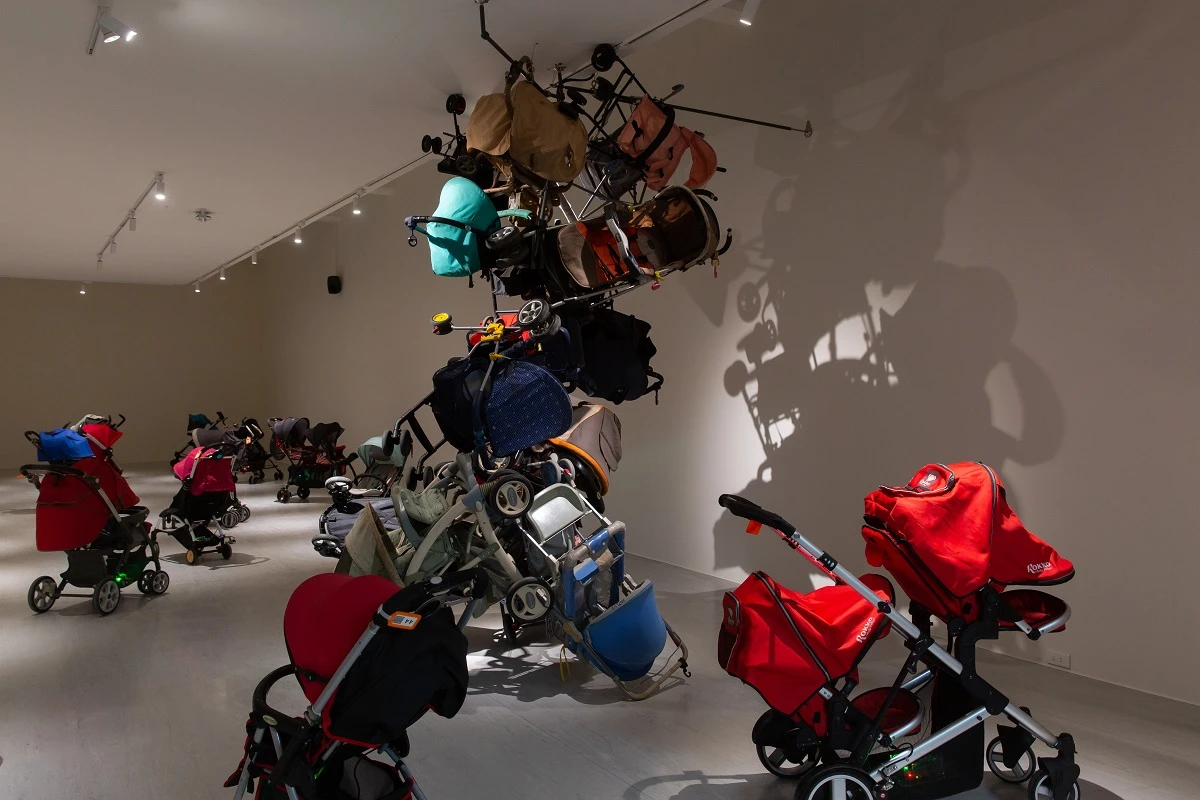
But yes, I think there were also some, or it started in the next few days, the special places in the Lviv railway station for refugees, like places where they could get the information, how to get to Poland, or to safer places. Volunteers that were helping people in wheelchairs or people with the children, with buggies to get around the railway station. And the Lviv railway station is still, well, and it was the point where people went to then go abroad, or to relocate to other western Ukrainian cities.
Yes, our Ukrainian railway did a lot to help these people at the beginning of the invasion, and they worked nonstop even despite the bombings, the shells, sometimes they damaged the tracks or the trains. Mostly, if there were some bombings near or at the tracks or the railway stations, most you got is a delay of a couple of hours. And because they really tried, they really did their best to work as much as they could at the beginning of the invasion.
The last big attacks on New Year's Eve were right here. There, you can see that the damaged building, there's a military manufacturing here and this is where the buildings were damaged by the missiles. I was in Kyiv during the attack, and right now their tactic is mostly to overload our air defense systems with a lot of drones and a lot of missiles. And then once the air defense system is distracted by these attacks, they launch a couple ones specifically aimed at one location, and they try to go around our defense system.
Driving past the TV radio tower, the main one in Kyiv that was damaged during the first weeks of the invasion. I remember awful footage from there, where, you know, people burned alive. But Ukrainians didn't really understand why Russians were targeting specifically the TV radio tower because this is an idea, you know, so rooted in their minds that the television translates the information, it's very crucial to their military complex and to their ideology. And for us, it's derelict. It's something from the past where people don't really know the television is not as important to us as it is to the Russian like entire propaganda machine. But they thought that it really works that it in here it works more or less the same.
I remember it's all in the fog, but in the first few hours of the invasion, when I packed my backpack and was going to Maria and Alexis' apartment, I was texting my team lead, my boss, I work for an Israeli I.T. company, and it's so absurd now. I was texting him that if it's okay, I'll take the day off. We have an invasion here, I'm not sure if I'll be able to work, and I also wrote to him that because a lot of people were expecting problems with the internet, with the cell phone connections, and that maybe we won't be able to call each other. Maybe people were sending out the numbers of the radio stations for every city to stay connected to the news, and we were really expecting them to cut the mobile connection as they did in Crimea, and I was also texting my team that maybe I won't be available because we really don't know if we will have a mobile service right now.
Like a bigger town, and Bucha and Vorzel are like smaller than us, really villages. They're bigger, but they're still smaller towns around Irpin, and they're not very far apart. I think it's only five kilometers between Bucha and Vorzel. My family, my mother, and my grandma were living in Vorzel on the 24th. My grandma still is. My mom was in Britain. And basically, sometimes they said they've been lucky because Vorzel hasn't really suffered as much as Bucha. Maybe, you know, it was a different unit of the army that was in Vorzel other than in Bucha, because there weren't really many civilian attacks in Vorzel, but they still suffered a lot because of the lack of electricity, water, the air attacks, and also because of some conflicts within the local residents because of the lack of resources. And I think they were under occupation for two months, not a month, I think, a month and a week, because on the 1st of April that region was already cleared from Russians.
But still, it mostly took a toll on their health because it was really cold, and they were forced to carry heavy items all the time. And I think it's still hard for my mom to hear any planes overhead in Britain right now. She's still not used to it because, you know, they have so many memories of those air attacks. And Hostomel, which is where there's a big airport that was attacked at the beginning of the war, is also very near
Bucha and Vorzel, and also a lot of the attacks, because those towns are very near.
我和我媽,在戰爭開始時,採取了行動,因為我和我爸爸還有 Maria,我們有一個計劃,如果全面入侵開始,我們就會上車,開往烏克蘭西部。我媽媽,她和我的外婆一起住在沃爾澤利的公寓裡。在 24 日的早上,我打電話給她,大概是上午 6 點或 7 點,我告訴她,你知道,戰爭開始了,我們必須走。「我們能去哪裡?」她問,「哪裡? 我們沒有地方可去。你知道,這是我們的家,我們的東西在這裡,我們的貓在這裡,這是我們的公寓,我們為什麼要走呢?你知道,我們沒有錢去任何地方。」我仍然認為,在戰爭一開始的時候,撤離並離開去任何地方會比留在被佔領地區並承受這些風險恐怖更好。但是,不幸的是,很多人一開始都留在那裡。他們仍然留在被佔領的領土上,因為他們有一種感覺:「 就是我們真的沒有地方可去,我們不是真的被歡迎去任何地方,這是我們的土地,這是我們長大的地方, 這是屬於我們的地方,無論在哪裡,你知道我們所有的財產都在這裡。 」 我想,更好的選擇仍然是逃跑,並找到一些機會,即使不是在國外,也最好到其它烏克蘭城市,而不是……
是的,直到最後一刻,我都不相信這會發生。有一個有趣的事情,在戰爭前一天,也就是 23 號,我想和我的朋友在基輔租一個公寓,所以 23 號我們去看了房子,和房東談了談,我和朋友在討論,我們真的應該這樣做嗎?我們不知道會怎麼樣?我想我們會等幾天,不簽租約,然後在 24 日,沒有人真的想過要選擇哪個公寓?要租多久?我在二月問過的每個人都說不確定,戰爭發生機率可能是 50/50。我們不太清楚俄羅斯是否會攻擊。
戰爭開始時的頭幾個星期都像是一場夢,你知道每個人都非常專注,我不知道該怎麼說,非常齊心和專注,做每件事非常有效率,但同時,又有一種這不是真的發生了的感覺。我記得在最初的幾個星期裡,我睡了很多, 這是我的壓力反應。
戰爭一開始,當 Maria 和爸爸,我記得大概是早上五點的時候給我打電話時,我記得我問了他們我應該收拾多少天的行李?我記得他們說大概兩個星期吧。我整理了一個相當小的行李。我想主要是文件、貴重物品和一些冬季衣物,還有我的筆電。但是幾個小時後,當我們開始閱讀新聞,意識到入侵的規模時,我回到了我住的公寓,收拾更多的東西。我記得我當時還打包了夏季的衣服,我還說我真的不會需要這些,我只是為了以防萬一帶上的。但很好,我帶上了它們。
我還是回來收拾了我在基輔的大部分東西,因為我住在伊萬-弗蘭科夫斯克,這個城市離利維夫不遠,在烏克蘭西部。但是當你處於壓力之下,你不會真正想到要收拾什麼,我想我收拾了我所有的襪子,這對兩個星期來說並不是必要的。但是在承受壓力狀況下很難做出決定。我們開車去西部時,第一個晚上我們住在羅夫諾,之後我們立刻去了利維夫,在 Maria 和 Alex 的朋友那裡住下了。然後我們分開了,因為他們要去邊境,而我要去伊萬-弗蘭科夫斯克,因為我的家人中有一部份在那裡,我可以住在他們那裡住幾個星期。
我們在車站等了大約 8 個小時,等待我的火車還有很長的時間,那裡一片混亂。人擠人,火車不斷取消,因為軌道損壞,或者火車狀況不可預測。我的火車被取消了,我想是晚上大約十點吧。我記得我和爸爸講電話,他說你知道你可以上任何一列開往你要去的方向的火車,當我去月台的時候,那裡擠滿了人,每個人都往不同的方向走,有些人們把行李留在月台上,因為他們帶不上火車了。
大多數人都去了海烏姆,那是烏克蘭邊境上的一個城鎮。我記得我上了一列從利斯坎斯科到伊萬諾-弗蘭科夫斯克的火車,這不是我買票的路線,但是它是朝同一個方向開的。我向查票員解釋,「 我的火車被取消了,我能上火車嗎? 」 他們都讓人們上車,不太檢查車票了,因為每個人都需要離開,每個人都朝著不同的方向走。在入侵的最初幾天和幾個星期裡,大家展現一種共同體的感覺,每個人都互相幫助。即使你沒有真正的車票或者必須的東西,人們也願意幫忙。
是的,在接下來的幾天裡開始的,在利維夫火車站有一些專門為難民設立的地方,比如他們可以獲取訊息,如何前往波蘭或者更安全的地方。志工幫助輪椅使用者或者帶著孩子、嬰兒車的人在火車站周圍移動。利維夫火車站仍然是人們去國外,或者搬遷到烏克蘭其他西部城市的主要車站。
是的,我們的烏克蘭鐵路局做了很多事情來幫助人們,在入侵初期,他們不停地工作,轟炸、炮彈有時候會損壞軌道或火車。如果在附近或者在火車站附近有轟炸,你最多只會延誤幾個小時,因為他們真的很努力。他們在入侵初期盡力工作,去年除夕夜的最後一次大規模攻擊就在這裡。你可以看到損壞的建築,這裡有一個軍工廠,這就是被導彈損壞的地方。我當時在基輔,這次襲擊,他們的戰術主要是用大量的無人機和導彈使我們的防空系統超載。一旦防空系統被這些攻擊分散了注意力,他們就會針對特定位置發動幾次攻擊,然後試圖繞過我們的防禦系統。
開車經過電視廣播塔,這是基輔的主要電視塔,在入侵的最初幾週受到了損壞。我記得那裡的可怕畫面,你知道,有人被活活燒死。但是烏克蘭人並不真正理解為什麼俄羅斯人會特別瞄準電視廣播塔,因為這是一個概念,你知道,根深蒂固地存在於他們的腦海中,即電視轉播訊息是非常關鍵的,對他們的軍事複合體和意識形態至關重要。對於我們來說,這是過時的。這是過去的事情,人們並不真正知道電視對我們來說不像對俄羅斯整個宣傳機器那麼重要。但他們認為它真的有用,他們認為在這裡它的作用大致是一樣的。
我恍惚記得入侵的前幾個小時,我收拾好背包去 Maria 和 Alex 的公寓時,我在發簡訊給我的團隊負責人,我老闆,我當時在一家以色列 IT 公司工作。現在想起來真是荒謬,我當時發簡訊給他,問他是否可以休假一天。我們這裡發生了戰爭,我不確定我能否工作,我還告訴他,因為很多人預期會出現網絡問題,手機斷訊問題,也許我們無法互相打電話,當時人們正在發送每個城市的廣播電台的號碼,以保持與新聞的聯繫,我們真的預測他們會切斷手機網絡,就像他們在克里米亞那樣做的,我也在發給我的團隊,也許我現在無法聯繫,因為我們現在真的不知道我們是否能使用手機服務。
它是一個比較大的城鎮,布查和沃爾澤利比我們小,真的像是村莊。它們比伊爾平大,但它們仍然是伊爾平周圍的一些較小的城鎮,它們之間的距離並不遠。我想布查和沃爾澤利只有五公里的距離。我家人,我的母親和奶奶, 24 日那天住在沃爾澤利。我奶奶現在還在那裡, 我媽媽在英國。有時他們說他們很幸運,因為沃爾澤利受到的苦難沒有布查那麼多。也許布查和沃爾澤利的軍隊是不同的單位,所以在沃爾澤利沒有像布查那樣發生很多對民眾的攻擊,但他們仍然因為缺乏電力、水、空襲,以及由於當地居民之間由於缺乏資源而引起的一些衝突而遭受了很多痛苦。我想他們被佔領了兩個月,不是一個月,我想,一個月和一個星期,因為 4 月 1 日該地區已經從俄羅斯人手中解放出來。
但是這些還是對他們的健康造成了傷害,因為天氣非常寒冷,他們被迫一直扛著重物,我想對我媽媽來說,現在聽到在英國空中飛過的任何飛機聲音都很難習慣。因為你知道,他們有很多關於那些空襲的記憶,還有戈斯托梅利,那裡有一個被攻擊的大型機場,它也非常靠近布查和沃爾澤利,還有很多次襲擊,因為那些城鎮非常靠近。
